

Table of Contents
- Colorful Kitchen Accessories vs Neutral Decor: The Quick Comparison
- What Each Style Really Costs You in Time and Money
- How to Mix Colors in Home Interior Design Without Overdoing It
- Best Ways to Add Color to a Neutral Kitchen
- Resale Value, Maintenance, and Longevity: What the Styles Cost Over Time
- How to Transition Your Kitchen Without Starting Over
- Conclusion: Choosing Between Colorful Kitchen Accessories and Neutral Decor
- Frequently Asked Questions
Last Updated: September 29, 2026
Colorful Kitchen Accessories vs Neutral Decor: The Quick Comparison
The verdict is simple: neutral decor wins on resale and upkeep, while colorful kitchen accessories win on personality and cost. Most kitchens work best with a neutral base and color layered on top. This guide from theJoyincolor breaks down both paths so you can pick with confidence.
That answer matters more than ever in 2026. Designers are moving away from stark whites toward warmer neutrals like canvas and parchment, yet they are also adding vivid pops of color against those soft backdrops, according to Houzz's 2026 home design trends report. The two trends are not in conflict. They are two halves of the same strategy.
Below, we compare cost, upkeep, resale impact, and the fastest ways to add color without repainting a single cabinet.
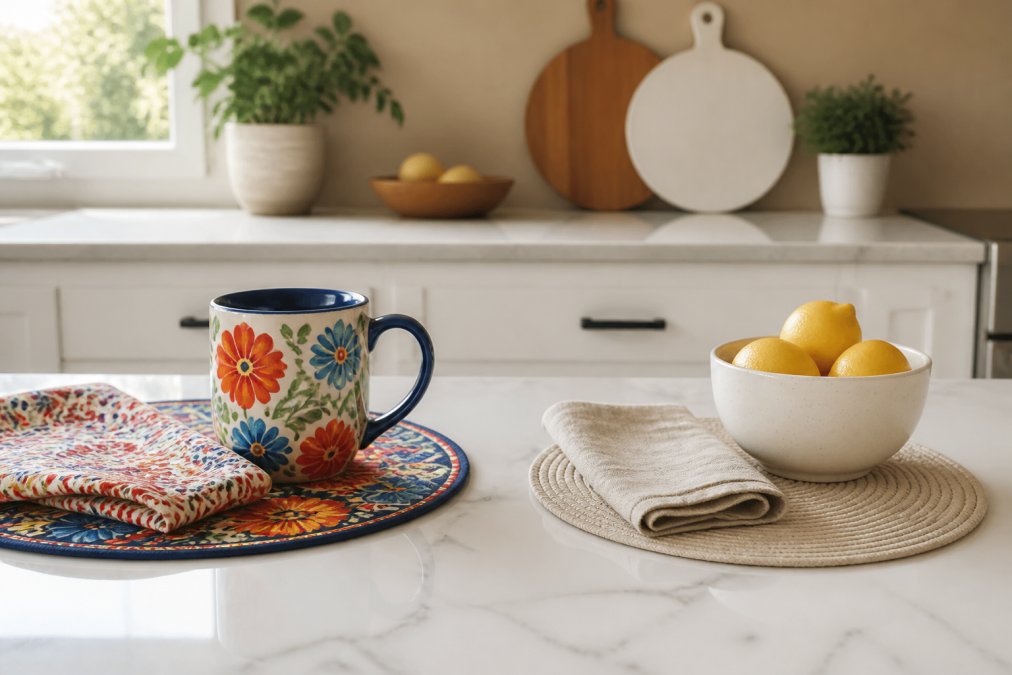
What Each Style Really Costs You in Time and Money
Neutral decor costs more upfront because it lives in permanent surfaces: cabinets, backsplash, and countertops. Colorful accessories cost far less because they are removable. That is the headline, but the real decision lives in the line items.
A full neutral kitchen renovation involves demolition, installation, and weeks of disruption. By contrast, a decor refresh through accessories takes an afternoon. That gap is the whole argument for starting with color.
| Factor | Neutral Decor | Colorful Accessories | Winner |
|---|---|---|---|
| Upfront cost | High (cabinets, tile, labor) | Low (removable pieces) | Accessories |
| Time to install | Weeks of disruption | One afternoon | Accessories |
| Ease of change | Difficult and expensive | Instant, near-zero cost | Accessories |
| Resale appeal | Broad | Buyer-specific | Neutral |
| Cleaning effort | Low | Moderate | Neutral |
| Replacement cycle | 10-20 years | 1-3 years | Neutral |
The catch: accessories need occasional washing and rotation, while sealed neutral surfaces mostly just need a wipe. A water-resistant placemat wipes clean in seconds; a cloth napkin goes in the wash. Neither is hard, but both happen more often than wiping down a quartz countertop.

The Hidden Cost Nobody Prices In: Color and Appetite
Most cost comparisons stop at the receipt. They miss a variable that actually changes how a kitchen performs: color psychology. Warm hues, reds, oranges, yellows, are widely associated with stimulating appetite and drawing people toward the table. Cool hues, blues, greens, tend to read as calming and can subtly suppress appetite. That is why so many fast-casual restaurants lean on red and yellow, and why blue plates are a running joke in diet circles.
For a home kitchen, this cuts both ways. If your goal is a room where people linger and eat, a warm accent layer (terracotta mugs, mustard napkins, a coral runner) does quiet work that a neutral palette cannot. If your goal is a calm, low-stimulation space, say, for someone managing portions or eating late, cool accents and a mostly neutral base tend to serve better.
This is the angle almost no comparison article covers, and it reframes the whole cost question. You are not just buying a $15 mug.
Where the Money Actually Goes
If you do go permanent, the cost concentrates in three places: cabinetry, countertops, and backsplash. Cabinets are typically the largest single line item in a kitchen project, followed by countertops, with tile and labor rounding out the total. Accessories invert that order entirely, the accent layer is the cheapest part of the room and the only part you can change without a contractor.
How to Mix Colors in Home Interior Design Without Overdoing It
The 60-30-10 Rule in Practice
The 60-30-10 rule splits a room into 60 percent dominant color, 30 percent secondary, and 10 percent accent. In a kitchen, the 60 is usually your cabinets and walls, the 30 is your countertop and backsplash, and the 10 is where color enters.
Best Ways to Add Color to a Neutral Kitchen
The best ways to add color to a neutral kitchen are the ones you can reverse in minutes. Start with the surfaces you touch daily, then build outward.
Here is a practical order of operations:
- Swap your mugs for pieces with color on the inside, rim, and handle.
- Add a patterned placemat set to anchor the dining surface.
- Introduce cloth napkins in a complementary hue.
- Layer in a runner, bowl, or small appliance in your accent color.
- Repeat the accent in two more spots so it reads as intentional.
Resale Value, Maintenance, and Longevity: What the Styles Cost Over Time
Neutral decor holds resale value better because it asks less of a buyer. Bold permanent choices narrow your pool. Accessories carry no such risk, since the next owner simply removes them. That is the short version. The longer version is where the real money lives, and it is the part almost no comparison article bothers to explain.

Why Neutral Wins at Resale, The Actual Mechanism
Appraisers do not price personality. They price comparable sales, condition, and functional updates. A kitchen with a bold painted island or a saturated backsplash does not appraise higher than an identical kitchen with a neutral one; it simply appeals to fewer buyers, which lengthens days-on-market and weakens your negotiating position. The neutral kitchen is not worth more on paper, it is worth more in practice because more offers compete for it.
Maintenance: Where Each Style Actually Shows Wear
Maintenance splits the other way. Painted cabinets and tile show scuffs and grease, and repainting means real money. A water-resistant placemat wipes clean, and cloth napkins go in the wash. The trade-off is frequency: accessories need attention more often, but each task is trivial.
Longevity and Sustainability: The Case for the Removable Layer
Sustainability favors the accessory route too. Replacing a mug or a napkin set extends the life of a kitchen without sending cabinets to a landfill. That is material longevity in practice, not just a talking point.
How to Transition Your Kitchen Without Starting Over
You can move from all-neutral to colorful without a renovation. Treat it as a staged transition, and give each stage a few weeks before deciding.
Conclusion: Choosing Between Colorful Kitchen Accessories and Neutral Decor
The real tension in this decision is not color versus no color. It is commitment versus flexibility, and most kitchens do not need to choose only one. Keep the permanent surfaces neutral, then let colorful kitchen accessories carry every ounce of personality.
Frequently Asked Questions
What color is best for kitchen decor?
There is no single best color, but warm neutrals like canvas, parchment and soft earth tones dominated kitchen palettes in early 2026, according to Houzz. Designers are moving away from stark whites and layering in colorful accents instead. If you want a safe base, start neutral on the walls and cabinets, then add color through accessories like mugs, placemats and napkins. That way you get personality without committing to a repaint.
What is the 3 color rule in interior design?
The rule caps a room at three main colors: one dominant shade, one secondary, and one accent. In a kitchen, that might be warm white cabinets, a sage green backsplash, and coral accents on the countertop. The point is cohesion. When you shop for colorful kitchen accessories, pick pieces that repeat one of your three colors so the room reads as intentional rather than cluttered.
How do I transition from a neutral kitchen to a colorful one?
Start with removable items before permanent ones. Swap in colorful mugs, a patterned placemat set, or cloth napkins, then live with the change for a few weeks. If it still feels right, move to cabinet hardware, then a backsplash or paint. This staged approach keeps costs low and lets you reverse anything that does not work. The Joy Mug with Color Inside ($15.63) is an easy first step because it adds color without changing your layout.
Do colorful kitchen accessories hurt resale value?
Permanent bold choices, like magenta cabinets, can narrow your buyer pool. Removable accessories rarely matter because buyers expect them to leave with you. If resale is a concern, keep cabinets, countertops and backsplash in warm neutrals and express color through mugs, linens and small decor. You get the look you want now, and a buyer still sees a flexible, move-in-ready kitchen later.
Are colorful accessories harder to clean and maintain?
Not usually. Most color comes from the finish or print, not the material, so a glazed ceramic mug or a polyester placemat cleans the same way regardless of shade. The Joy Mug with Color Inside is ceramic, and the placemat and napkin sets are water-resistant polyester. Matte finishes and heavily textured pieces do show grease and dust faster than glossy ones, so choose glossy or water-resistant surfaces in high-use zones.