

Table of Contents
- Why a Design Fruit Bowl Is More Than Countertop Decor
- How to Style a Fruit Bowl on Any Countertop
- Best Materials for Fruit Bowls: Airflow, Durability, and Care
- Sizing and Capacity: How Much Fruit Should a Bowl Hold?
- Modern Kitchen Decor Ideas That Feature a Design Fruit Bowl
- Functional vs. Decorative: Which Design Fruit Bowl Fits Your Routine?
- Pricing Breakdown: What to Expect at Different Price Points
- Conclusion
- Frequently Asked Questions
Last Updated: September 26, 2026
Why a Design Fruit Bowl Is More Than Countertop Decor
A design fruit bowl is a functional object that stores fresh produce while shaping how a kitchen looks, and the best ones do both jobs at once. That dual role explains why the category has moved well beyond plain ceramic: up to 40% of fruits and vegetables are wasted, according to The Cross Legacy's 2026 food waste analysis, and poor storage design plays a part. At theJoyincolor, we treat the bowl as the rare decor piece that earns its counter space twice over.
Here is the tension most buying guides skip: a bowl that looks striking in photos can speed up spoilage if it traps ethylene gas and moisture, while one built purely for airflow can look like hardware.
How to Style a Fruit Bowl on Any Countertop
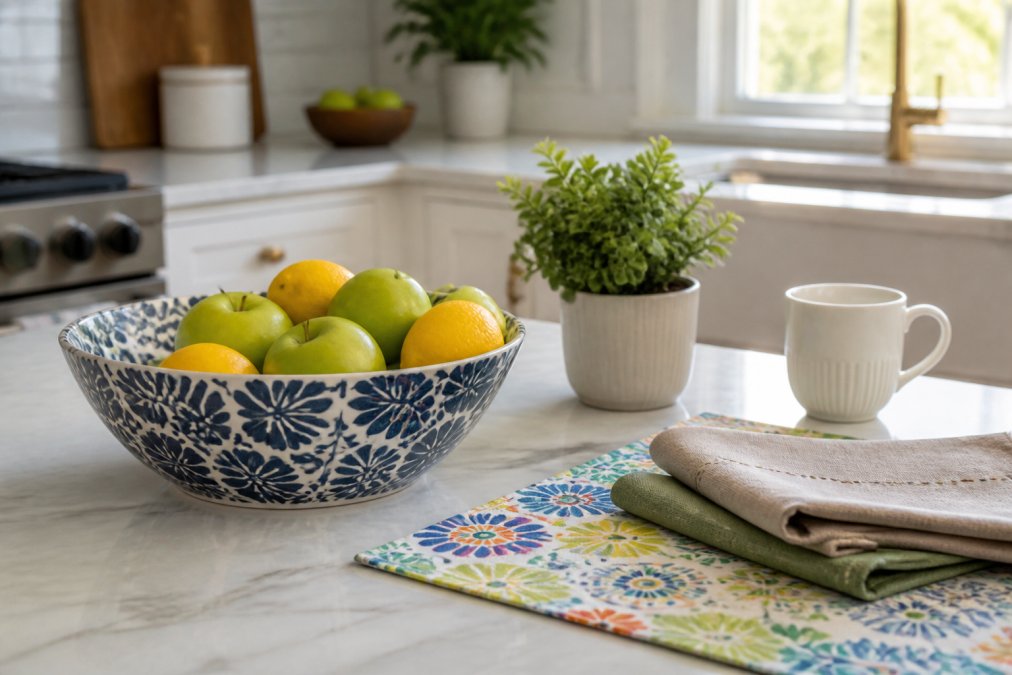
Styling a fruit bowl comes down to four moves: place it, proportion it, layer under it, and leave breathing room around it. Get those right and even a simple bowl reads as intentional.
Placement Rules That Actually Hold Up
Three placements cover most kitchens:
- Centered on an island. Works when the island is at least 36 inches deep and the bowl stays under about 12 inches tall, so it does not block sightlines across the room.
- Offset on a perimeter counter. Push it toward the end of the run, away from the sink and stove, so it is not competing with prep clutter or catching grease and steam.
- On a bar or buffet. Best for a bowl you refill less often; keep it within arm's reach of where you actually eat fruit, or it becomes pure decor.
The rule of thumb: the bowl should be the tallest loose object in its zone, but not taller than the items it complements.
Color Pairing and Visual Weight
Color pairing works best when the bowl either echoes one nearby element or deliberately breaks from it. A matte white bowl on a white counter disappears; against a dark wood island it becomes a centerpiece.
- Match the bowl to your backsplash for a calm, blended look
- Contrast it against your countertop for a focal point
- Repeat one accent color from the room, nothing more
- Keep the bowl's finish different from the counter's finish so the two do not visually merge
Layering with Placemats and Linens
Layering turns a fruit bowl into part of a scene. A water-resistant placemat under the bowl adds a color block and protects the counter from drips and scratches.
Styling for Airflow, Not Just Looks
The best-looking setup is usually the best-ventilated one. Open-air and wire-frame bowls let you see the fruit, so you notice soft spots sooner. Solid ceramic and glass bowls hide the bottom layer, where fruit can spoil before you see it.
Best Materials for Fruit Bowls: Airflow, Durability, and Care
The best material for a fruit bowl depends on whether you prioritize airflow, durability, or looks, because no single material wins on all three.
| Material | Airflow | Durability | Best For |
|---|---|---|---|
| Woven (rattan, wire) | High | Moderate | Maximum airflow |
| Ceramic | Low | High | Statement color pieces |
| Glass | Low | Moderate | Minimalist displays |
| Stainless steel | Medium | Very high | Modernist kitchens |
| Wood | Low | Moderate | Warm, handcrafted looks |
Why Airflow Matters More Than Most Guides Admit
Fruit is alive after you bring it home, respiring and releasing moisture and ethylene gas as it ripens. In a sealed bowl, that gas and moisture pool around the fruit, speeding ripening and creating damp conditions where mold starts. An open or ventilated bowl lets both escape, so fruit holds longer.
Cleaning and Maintenance by Material
Cleaning routines differ sharply by material, and skipping them shortens a bowl's life.
All the Loves Graffiti Love-Placemat Set →
- Woven (rattan, bamboo, wire). Dust weekly with a dry soft brush. Never soak woven bowls; moisture weakens the weave and can grow mildew in the gaps. If a spill happens, blot it immediately and let the bowl air-dry fully before refilling.
- Ceramic. Warm soapy water handles most messes. Check the base for a dishwasher-safe mark before assuming; many glazed ceramics are fine on a top rack, but hand-painted or gold-trimmed pieces are not. Avoid thermal shock by letting a cold bowl come to room temperature before washing.
- Glass. Warm soapy water or a dishwasher on a gentle cycle. Glass is non-porous, so it does not hold odor, but it can chip on the rim if it knocks against other dishes.
- Stainless steel. Wipes clean and tolerates frequent washing. Dry it after washing to avoid water spots, and avoid abrasive pads that dull the finish.
- Wood. Hand-wash only, dry immediately, and never leave it sitting in water. Re-oil food-safe wood bowls every few months with a food-grade mineral oil to keep the surface sealed and prevent cracking.
Matching Material to How You Eat
If you buy fruit weekly and eat it daily, prioritize airflow and easy cleaning: woven, wire, or stainless steel. If your bowl is mostly a visual anchor you refill every few days, ceramic and glass give the most color and form freedom, as long as you keep the fill shallow. Wood sits in the middle: warm and handcrafted, but it asks for more care.
Sizing and Capacity: How Much Fruit Should a Bowl Hold?
A fruit bowl should hold roughly three to five days of fruit for your household, which for most people means a bowl 25 to 30 cm across. Oversized bowls invite overbuying, and overbuying is how produce ends up in the trash.
Modern Kitchen Decor Ideas That Feature a Design Fruit Bowl
Modern kitchen decor ideas increasingly treat the fruit bowl as a sculptural anchor rather than an afterthought. Designers are prioritizing metallic and matte finishes with open structures to keep countertops visually light, according to Foter's 2026 decor trend guide.
- Pair a sculptural bowl with a neutral countertop
- Use one statement piece per surface, not three
- Let geometric or organic forms echo your cabinetry lines
- Keep nearby items low so the bowl stays the tallest object
Functional vs. Decorative: Which Design Fruit Bowl Fits Your Routine?
Functional and decorative fruit bowls are not opposites, but they do pull in different directions, and your routine decides which matters more. The Frubo project from the School of Visual Arts Products of Design program showed that a bowl can carry a modern aesthetic and a hidden functional agenda at the same time.
Pricing Breakdown: What to Expect at Different Price Points
Fruit bowl pricing breaks into three tiers, and the jump between them buys materials and construction more than size.
| Price Range | Typical Materials | What You Get |
|---|---|---|
| Under $30 | Wire, basic ceramic | Simple function, limited finish |
| $30-$80 | Ceramic, glass, wood | Better finish, more color options |
| $80-$200+ | Handcrafted, designer | Sculptural forms, premium materials |
Conclusion
Choosing a design fruit bowl is a decision about how you live, not just how your kitchen looks. Pick a material that matches your airflow needs, a size that matches your eating habits, and a finish that matches your space, and the bowl will keep earning its place long after the novelty fades.
Frequently Asked Questions
How do I make a fruit bowl look nice on my countertop?
Start with a bowl that matches your kitchen's palette, then group fruit by color or height for contrast. A matte finish or metallic accent bowl keeps the look clean. Add a placemat underneath to anchor the arrangement. Rotate fruit every few days so the display stays fresh. For a cohesive look, choose a design fruit bowl with an open-air form that lets colors show through rather than hiding them.
What fruit should not be stored together in a fruit bowl?
Ethylene-producing fruits like bananas, apples, and avocados can speed up ripening in ethylene-sensitive produce such as berries, grapes, and leafy greens. Keep those separate or use a bowl with good air circulation to reduce buildup. A bowl with open sides or a wire-frame design helps disperse ethylene gas and slows spoilage. Up to 40% of fruits and vegetables are wasted, so smart separation matters.
What are the best materials for fruit bowls that last?
Ceramic and stainless steel resist stains and clean easily. Wood and woven materials add warmth but need occasional oiling and should not soak. Glass shows fruit clearly but can chip. For daily use, look for non-toxic finishes and a durable build.
How do I choose a design fruit bowl for a modern kitchen?
Measure your countertop or kitchen island space first. A bowl between 8 and 12 inches wide fits most setups without crowding. Match the bowl's finish to your hardware: matte black with stainless appliances, warm wood with brass fixtures. Consider a sculptural silhouette or geometric shape as a centerpiece. For a curated look, pair it with modern kitchen decor ideas like neutral linens and a small tray.