

Table of Contents
- Why a Designer Drinks Bottle Belongs in Your Daily Carry
- Aesthetic Water Bottle Brands: What Sets Them Apart
- Temperature Retention, Leak-Proof Seals, and Everyday Durability
- Customization and Personalization: Laser-Engraved and Gift-Ready Options
- Funny Secret Santa Gifts: Designer Bottles That Get a Laugh
- Cleaning, Care, and Material Safety for Your Designer Drinks Bottle
- How to Choose a High-Quality Designer Drinks Bottle
- Conclusion
- Frequently Asked Questions
Last Updated: October 2, 2026
Why a Designer Drinks Bottle Belongs in Your Daily Carry
A designer drinks bottle is a reusable beverage container built around visual identity as much as function: distinctive finishes, considered proportions, and materials chosen to look good in hand and on a desk. The global reusable water bottle market was valued at $10.1 billion in 2025 and is projected to grow from $10.5 billion in 2026 to $14.5 billion by 2033, according to Grand View Research's reusable water bottle market analysis. That growth is not driven by thirst alone.
Below, we'll break down materials, temperature retention, customization, and care.
Aesthetic Water Bottle Brands: What Sets Them Apart
Aesthetic water bottle brands compete on three things: material honesty, finish quality, and how the bottle feels after six months of use. Cheap bottles win on the shelf and lose in the bag.
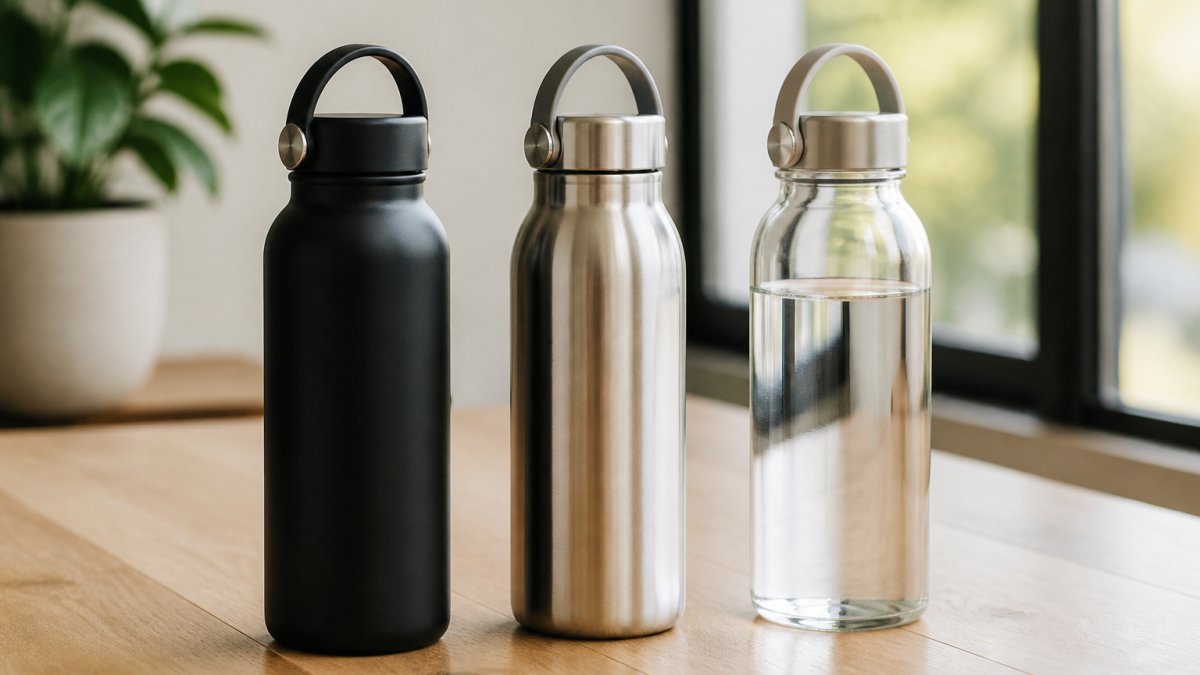
Materials That Hold Up: Stainless Steel, Glass, and Hybrid Designs
Stainless steel dominates for a reason. It resists dents, holds temperature, and takes a powder coat without chipping. Glass wins on taste purity but adds weight. Hybrid construction, a stainless steel exterior with a glass interior, is the current high-end answer, and Wirecutter's water bottle testing notes this multi-material approach is spreading through premium drinkware. Market.us forecasts metal bottles reaching $0.41 billion and glass bottles $0.38 billion in 2026, so neither material is going away.
Finish and Texture: Why the Outside Matters as Much as the Inside
A matte finish hides fingerprints. A brushed finish hides scratches. Gloss shows both. Textured grips matter more than buyers expect, because a condensation-free exterior only stays that way if you can actually hold it. Luxury houses like Saint Laurent and Balenciaga have entered the category, which tells you the finish is now the product.
Temperature Retention, Leak-Proof Seals, and Everyday Durability
Temperature retention comes down to double-wall vacuum insulation, and the gap between good and bad is measured in hours, not minutes.
What separates a $15 bottle from a $45 bottle is execution. Three specs tell you almost everything:
- Wall thickness and vacuum quality. Thin walls dent and lose their vacuum seal. A degraded vacuum stops insulating entirely, leaving a heavy single-wall container.
- Copper or silver lining. Many premium bottles add a thin copper or silver coating inside the vacuum gap to block radiant heat transfer, the third path heat travels. This is why two bottles with identical steel can hold temperature for noticeably different lengths of time.
- Lid insulation. The lid is the largest uninsulated surface on most bottles. A lid with its own foam or vacuum layer holds temperature meaningfully longer than a hollow plastic cap.
Seals are where cheap bottles fail.
Durability is a separate axis from insulation: a bottle can hold temperature perfectly and still fail structurally.
A practical durability check takes thirty seconds. Run a fingernail around the inside of the neck, a smooth, continuous rim means the threads were machined properly. Squeeze the body gently; a vacuum-sealed bottle feels rigid, while a failed vacuum feels flexible or clicks faintly. And check the base: a bottle that rocks on a flat counter will wear unevenly and eventually leak at the seam.
For hot drinks, vacuum-sealed stainless steel is the only construction that holds temperature safely. Glass insulates poorly on its own, and single-wall metal transfers heat to your hand within minutes.
Customization and Personalization: Laser-Engraved and Gift-Ready Options
Laser-engraved bottles hold their marking permanently because the design is cut into the surface rather than printed on top. Printed logos fade, peel, and wash off; engraving does not.
Customization options include engraved stainless steel: permanent, subtle, works on matte and brushed finishes. Laser engraving removes the powder coat or oxidizes the steel surface, leaving a mark in a slightly different tone: light gray on matte black, a darker etch on brushed steel.
For gift-ready purchases, engraving a name or short phrase turns a generic bottle into something the recipient keeps. Research from George Washington University's water bottle design analysis identified an optimal configuration specifically for young adults aged 18 to 30, a group that treats personalization as a baseline expectation rather than an upgrade.
The Material-Safety Question Most Customization Guides Skip
Customization and material safety interact. The inside of the bottle, the surface that touches your drink, should be food-grade stainless steel, typically 18/8 or 304, meaning the alloy contains roughly 18 percent chromium and 8 percent nickel, which makes it resistant to corrosion and safe for acidic drinks like citrus water or coffee.
Engraving happens on the outside, so it does not affect the interior surface. But two related details do:
- Coated interiors. Some bottles use a painted or coated interior liner for color. If it is not explicitly labeled food-grade and BPA-free, skip it: interior coatings can chip, exposing whatever is underneath.
- Lead in the vacuum seal. A small number of imported bottles have been found to use lead in the sealing pellet at the base, which is why the base of a vacuum bottle should never be exposed to the interior. Reputable manufacturers now publish lead-free certifications. If a listing does not mention it, ask.
BPA-free is the baseline claim, not a differentiator. BPA has been restricted in baby bottles and sippy cups in the United States since 2012, so a BPA-free label only tells you one specific chemical was avoided, not that the bottle is certified safe overall.
Care That Preserves Both the Finish and the Seal
Customization only pays off if the bottle survives daily use, and high-end bottles need specific care.
- Wash the bottle daily with warm water and mild dish soap.
- Scrub the lid gasket separately; it traps residue and odor.
- Skip the dishwasher for vacuum-sealed and engraved bottles. Dishwasher heat can compromise the vacuum layer and dull engraved finishes.
- Air-dry upside down with the lid off.
- Deep-clean with a baking soda soak once a month.
Never put a vacuum-sealed bottle in the freezer or microwave, temperature extremes can compromise the sealed vacuum. For engraved bottles, avoid abrasive sponges; a soft brush preserves the contrast between the engraving and the surrounding finish.
The sustainability angle ties back to customization in a way most guides miss. A bottle you keep because it is personalized is a bottle that stays out of the waste stream. The environmental case is not abstract: according to Habits of Waste data on single-use containers, 481.6 billion plastic bottles were used worldwide in a single year. One durable, engraved bottle replaces hundreds of them, but only if the personalization is good enough that you actually keep carrying it.
Funny Secret Santa Gifts: Designer Bottles That Get a Laugh
Funny secret Santa gifts work best when the joke is in the engraving, not the object. A well-made bottle with an absurd phrase gets used for years; a novelty mug gets donated in January.
The formula is simple: buy a bottle you would genuinely want, then put something ridiculous on it. Pair it with a capacity that suits the recipient, 17 to 24 ounces for a commute, 32 ounces for a desk.
Cleaning, Care, and Material Safety for Your Designer Drinks Bottle
Material safety starts with the word food-grade. Food-grade stainless steel (18/8 or 304) and food-grade glass do not leach into your drink. Unmarked mystery metal does.
Cleaning rules that actually matter:
- Wash the bottle daily with warm water and mild dish soap
- Scrub the lid gasket separately; it traps residue
- Skip the dishwasher for vacuum-sealed and engraved bottles
- Air-dry upside down with the lid off
- Deep-clean with a baking soda soak once a month
Never put a vacuum-sealed bottle in the freezer or microwave, temperature extremes can compromise the sealed vacuum.
How to Choose a High-Quality Designer Drinks Bottle
Choosing well comes down to matching four specs to how you actually use the bottle. Capacity, material, seal type, and finish.
| Priority | What to Look For | Why It Matters |
|---|---|---|
| Daily commute | 17-24 oz, double-wall, leak-proof lid | Fits a bag, survives being laid sideways |
| Desk use | 24-32 oz, matte finish, wide mouth | Easy refill, hides fingerprints |
| Gifting | Laser-engraved, gift-ready packaging | Personalization lasts, presentation matters |
| Hot drinks | Vacuum-sealed, stainless steel only | Glass and single-wall lose heat fast |
| Sustainability | Reusable, food-grade, repairable parts | Replaces single-use bottles over years |
The environmental case is not abstract. According to Habits of Waste data on single-use containers, 481.6 billion plastic bottles were used worldwide in a single year.
A common mistake is buying for the shelf rather than the routine. Pick the capacity you will actually carry, then the finish you will still like in a year.
Conclusion
theJoyincolor curates products built around color, thoughtful design, and everyday quality, so your daily essentials look as considered as the rest of your space. Browse the collection, pick a finish that fits your routine, and get a bottle you will still be carrying next year.
Frequently Asked Questions
Are designer water bottles worth the investment?
It depends on what you value. A designer drinks bottle typically costs more because of better materials, vacuum-sealed insulation, and finishes that resist chipping. If you carry a bottle daily, a durable option can outlast several cheap ones. The global reusable water bottle market hit $10.5 billion in 2026, which shows plenty of buyers see the value. Look for leak-proof seals, food-grade materials, and a warranty before you commit.
What are some aesthetic water bottle brands to consider?
Aesthetic water bottle brands focus on color, texture, and silhouette rather than just function. When comparing, check whether the bottle uses double-wall stainless steel, whether the finish is powder-coated or painted, and whether replacement lids are available. A bottle that looks good but leaks or dents easily is not worth the shelf space.
How do I choose a high-quality designer drinks bottle?
Start with material. Double-wall vacuum-sealed stainless steel holds temperature longest and resists condensation. Glass interiors with stainless exteriors are a newer hybrid option that keeps taste neutral. Check the lid: silicone gaskets and threaded caps leak less than push-top designs. Capacity matters too, since 17 to 25 ounces fits most cup holders. Finally, confirm the bottle is food-grade.
What makes funny secret santa gifts like a designer bottle a good pick?
A designer drinks bottle works as a funny secret santa gift when you pair it with a joke card or a custom engraving. It is practical enough that the recipient will actually use it, unlike novelty items that end up in a drawer. The reusable bottle market is projected to reach $14.5 billion by 2033, so gifting something reusable also fits a broader trend. Add a handwritten note to land the joke.