

Table of Contents
- Luxury vs Mass Produced Home Decor: The Core Differences
- Why Quality Home Decor Lasts Longer
- How to Spot High Quality Home Decor Before You Buy
- Cost, Resale Value, and Long-Term Investment
- Sustainability: Luxury vs Mass Produced Home Decor's Environmental Footprint
- The Hybrid Decor Strategy: Mixing Both Without Compromising Style
- Conclusion
Last Updated: August 21, 2026
Americans spend an average of $2,752 per year on home decor, according to Level Frames' home decor spending research, yet 74% report buyer's remorse after purchasing trendy, mass-market pieces. The debate over luxury vs mass produced home decor isn't just about taste, it's about where your money goes, how long things last, and what your space says about you. Below, we break down the real differences between artisanal and mass-produced decor, including what quality actually looks like, how to spot it before you buy, and a practical strategy for mixing both intelligently.
Luxury vs Mass Produced Home Decor: The Core Differences
Luxury home decor is defined by intentional craftsmanship, limited production runs, and materials selected for durability and aesthetic depth. Mass-produced home decor is manufactured at scale using standardized processes designed to minimize cost and maximize volume.
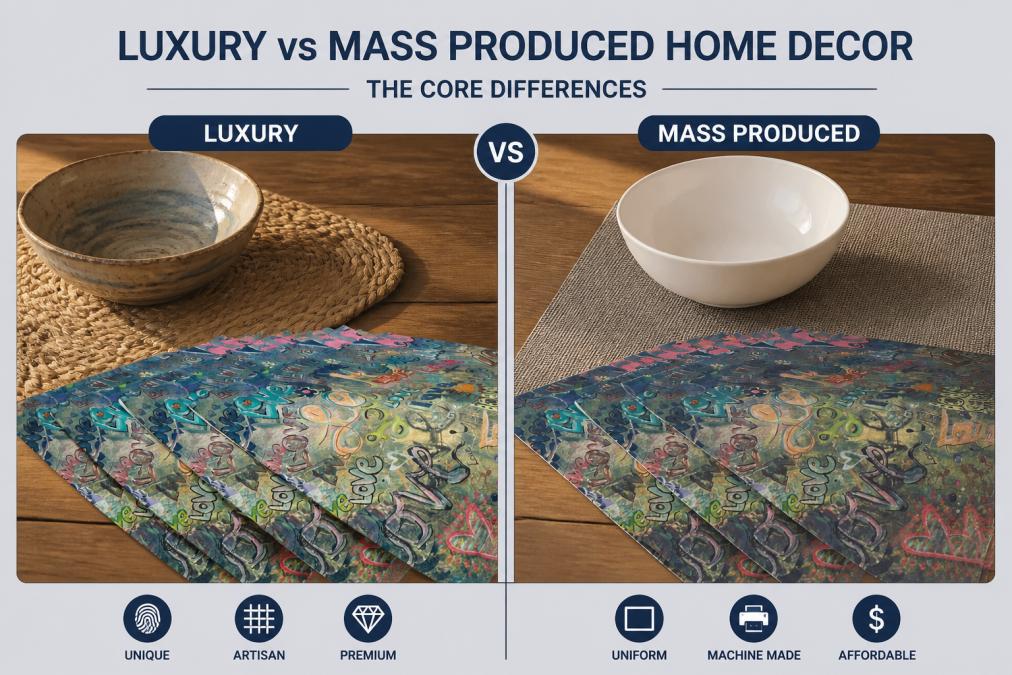
According to Mordor Intelligence's US Home Decor Market analysis, mass-market products accounted for 69.47% of the home decor market share in 2025. At the same time, the premium and luxury segments are projected to grow at a 9.24% CAGR through 2031, the fastest-growing category in the entire market. Consumers are getting smarter about when to choose each.
What 'Artisanal' Actually Means in 2026
"Artisanal" means a piece was made by a skilled individual or small workshop using techniques that can't be fully replicated by machine. The result is natural variation: slight differences in grain, glaze, texture, or proportion that make each piece genuinely one of a kind. In 2026, Forbes reported that luxury interior design is moving toward "intentionality, authenticity, and depth," with demand for top-tier craftsmanship outpacing the availability of skilled trades.
"You can feel when something has been touched by human hands. There's an intimacy and soul that comes from knowing someone shaped it slowly." -- Designer, as quoted in The Soul of a Room: Why Handcrafted Decor Is the Trend That Lasts (LA Times, 2025)
Artisanal doesn't automatically mean inaccessibly expensive. A handcrafted accent pillow, cloth napkins with distinctive design, or a placemat with real visual character are artisanal in spirit even when accessible in price.

How Mass-Market Production Works, and Where It Cuts Corners
Mass production optimizes for cost per unit through standardized materials, high-speed manufacturing, and design decisions suited to the widest possible audience. The corners most often cut:
- Material substitution: Solid wood replaced with MDF; natural fibers swapped for cheaper synthetics with shorter lifespans
- Finish quality: Surface treatments applied quickly rather than cured properly, leading to chipping or peeling within months
- Design homogeneity: The same pattern appears across dozens of retailers simultaneously, becoming dated almost immediately
- Ethical sourcing gaps: Long, opaque supply chains with varying labor and environmental standards
A $12 throw pillow serves a real purpose. The problem is expecting mass-market pieces to perform like investment decor.
Why Quality Home Decor Lasts Longer
Quality home decor lasts longer because materials, joinery, and finishing techniques are designed for repeated use over years, not seasons.
Material Quality and Construction Standards
The most reliable signal of durability is material specification. Solid hardwood, kiln-dried before use, resists warping. Hand-knotted rugs made from wool or silk maintain their structure for decades. Ceramic pieces fired at higher temperatures are denser and more chip-resistant.
Construction standards matter equally. Dovetail joints in furniture drawers indicate precision assembly; stapled joints indicate speed. Sewn two-ply placemats hold their shape and resist fraying in ways single-layer alternatives don't. These details separate a piece you'll own for ten years from one you'll replace in two.
The Real Cost of Disposable Decor
Americans spend $8.7 billion per year on trend-driven home decor items often discarded within a year, according to AweDeco's analysis of US home decor waste patterns. That research found 12.1 million tons of furniture are discarded annually, with 80.1% ending up in landfills.
A $30 mass-market vase replaced three times over five years costs $90 and generates three units of waste. A $75 ceramic piece lasting the same five years costs less per year and creates one unit.
How to Spot High Quality Home Decor Before You Buy
Spotting high quality comes down to three things: material transparency, construction details, and sourcing information.
Specific things to look for:
- Material specifications listed precisely: "solid oak" not just "wood"; "100% polyester broadcloth, sewn two-ply" not just "fabric"
- Weight and density: Quality ceramics feel heavier than mass-market equivalents, indicating denser, more durable material
- Finish consistency: Run your hand across surfaces; uneven texture or rough edges are red flags
- Stitching on textiles: Hemmed edges on all sides, consistent stitch density, and no loose threads indicate quality
- Unique design character: Pieces with genuine design integrity look intentional, not generic
The return policy itself is a quality signal. Brands confident in their products tend to stand behind them.
Supply Chain Transparency and Ethical Sourcing
Artisan-made or premium pieces typically come with traceable sourcing: where the wood was harvested, which workshop made it, and what finishing process was used. Mass-market products often can't provide this. Sustainable and reclaimed wood variants are set to grow at a 10.29% CAGR through 2031, reflecting consumer prioritization of ethical sourcing.
Cost, Resale Value, and Long-Term Investment
Staged homes sell for 5-10% more than non-staged properties, according to the National Association of Realtors 2024 home staging research. Quality decor improves both how you live in a space and what that space is worth.
| Decor Type | Upfront Cost | Avg. Lifespan | Cost Per Year | Resale Signal |
|---|---|---|---|---|
| Mass-market accent piece | $15-40 | 1-2 years | $10-25 | Low |
| Mid-range quality piece | $40-100 | 4-6 years | $8-18 | Moderate |
| Artisan/luxury piece | $150-500+ | 10-20+ years | $10-30 | High |
| Curated textile set | $35-50 | 5-8 years | $6-10 | Moderate-High |
The 2026 data from Credence Research shows the premium price segment growing at a 10.4% CAGR, driven by buyers shifting toward limited-edition pieces and custom commissions. However, price increases account for more than 80% of luxury market growth over the past five years, meaning not every premium-priced item represents genuine value.
Sustainability: Luxury vs Mass Produced Home Decor's Environmental Footprint
The environmental gap between luxury and mass-produced home decor is substantial. The 12.1 million tons of annual furniture waste represents a systemic failure of the disposable decor model. Luxury and artisan-made pieces operate on different logic: they're designed to outlast trends and stay out of landfills.
The sustainability advantage of quality decor shows up in three ways:
- Longevity: A piece made to last 20 years generates a fraction of the waste of five pieces made to last four years each
- Material sourcing: Premium producers are more likely to use sustainably harvested wood, recycled metals, or natural fibers with lower environmental impact
- Repairability: Quality construction can be repaired; mass-market construction typically cannot
"The houses we always remember are not the ones that appear perfect, but the ones that are multidimensional, personal, and lived in." -- Emily Henderson, Interior Designer (The Most Googled Home Decor Trends in the USA, 2026)
The Hybrid Decor Strategy: Mixing Both Without Compromising Style
The most practical approach isn't choosing one or the other. It's knowing which category each purchase belongs in.
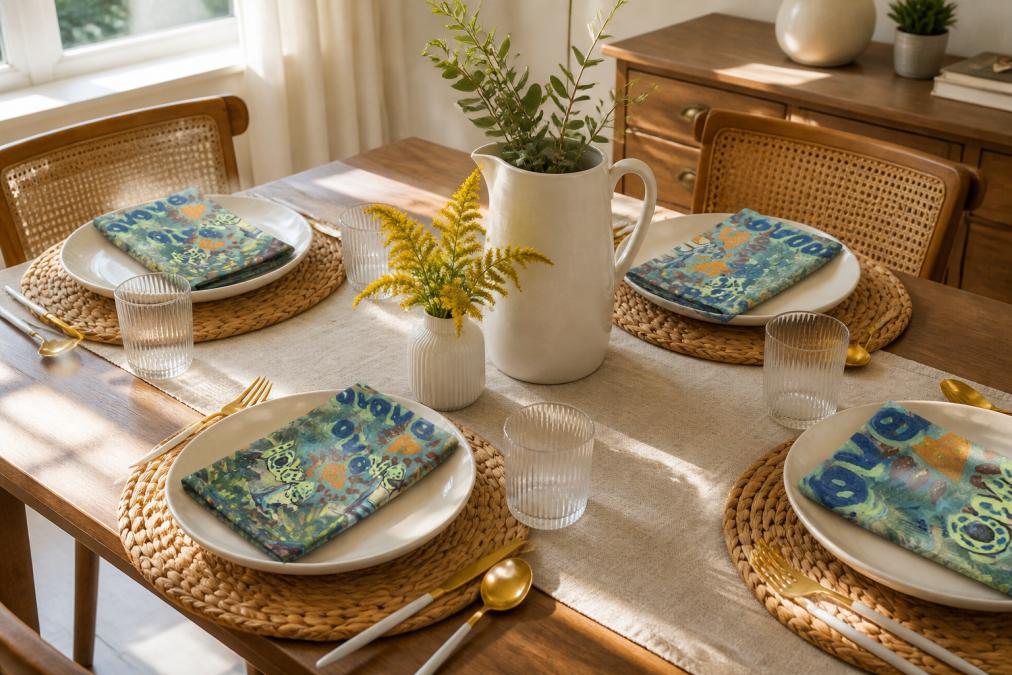
A practical framework for the hybrid approach:
- Invest in: Structural furniture, lighting fixtures, rugs, and anything that takes physical stress daily
- Curate selectively: Ceramics, artwork, and statement objects where craftsmanship is visible
- Refresh affordably: Textiles, table linens, accent pillows, and seasonal decor where color and pattern do the work
theJoyincolor's Placemat Set ($40.52 for four) and Cloth Napkin Set ($35.04 for four) deliver genuine design character and quality construction at a price point that makes refreshing your dining aesthetic practical. The accent pillow collection, starting at $17.13, uses machine-washable cases with shape-retaining inserts, functioning in real daily life.

Quality textiles are designed for regular washing; mass-market textiles often aren't. Machine-washable napkins and placemats with hemmed edges maintain their appearance through repeated use in ways cheaper alternatives don't.
The real challenge with home decor is knowing which decision you're making at the moment of purchase. Most buyer's remorse comes from applying mass-market logic to a purchase that needed investment thinking. theJoyincolor is built around the idea that curated, colorful, quality-made pieces don't have to break a budget to be worth keeping. Browse the accent pillow collection and dining textile sets to start building a space that reflects genuine taste rather than chasing the next trend.
Frequently Asked Questions
What are the primary differences between luxury and mass-produced home decor?
Luxury home decor is typically made with higher-grade materials, closer attention to construction, and more distinct design, often in smaller runs or custom commissions. Mass-produced decor prioritizes cost efficiency and volume, which can mean thinner materials, standardized patterns, and faster wear. The practical gap shows up in how pieces hold up over years of daily use, not just how they look on day one.
Is luxury home decor a better long-term financial investment?
In many cases, yes. Homes staged with higher-quality pieces sell for 5-10% more than non-staged properties, according to the National Association of Realtors. Bespoke and artisan-made items also tend to hold aesthetic value longer because they aren't tied to a single trend cycle. The caveat: price alone doesn't guarantee quality. Pieces need genuine craftsmanship and durable materials to appreciate rather than depreciate.
How can you mix luxury and mass-produced items for a balanced look?
Anchor the room with one or two investment pieces, a handcrafted rug, a solid wood side table, or a bespoke textile, then fill in with well-chosen, affordable accents. The key is intentionality: mass-market items work well when they serve a supporting role rather than competing for visual attention. Colorful placemats, patterned napkins, or accent pillows are low-cost ways to add personality without committing to a large spend.
What are the environmental benefits of choosing handcrafted decor?
Handcrafted and artisan-made decor generally produces less waste than mass manufacturing because it's made in smaller batches with more deliberate material use. Mass-produced furniture contributes to 12.1 million tons of furniture discarded annually in the US, with 80.1% ending up in landfills. Buying fewer, longer-lasting pieces, and choosing makers with transparent sourcing, reduces that cycle of purchase, discard, and replace.
How does material quality impact the longevity of home decor?
Directly and significantly. Higher-density fabrics, solid wood joinery, and hand-applied finishes resist daily wear far better than particle board, thin veneers, or screen-printed synthetics. Luxury home decor made with quality materials often requires simple care, regular dusting, occasional conditioning, rather than early replacement. Mass-produced alternatives may look similar at purchase but show wear within months under the same conditions.
This article was written using GrandRanker