

Table of Contents
- Interior Design Basics for Beginners: What Modern Aesthetic Actually Means
- Modern Home Decor Ideas That Work in Real Rooms
- Home Decor Color Palette Ideas for a Cohesive Look
- Measure First: Furniture Layout, Scale, and Proportion
- How to Style Home Decor Without a Design Degree
- A Beginner's Step-by-Step Plan for Decorating a Whole Home
- Modern Aesthetic Decor on a Budget: Renters, Small Spaces, and Secondhand
- Frequently Asked Questions
Last Updated: October 17, 2026
Interior Design Basics for Beginners: What Modern Aesthetic Actually Means
Modern aesthetic home decor for beginners starts with one rule: modern is a period, not a mood, and that rule applies to modern aesthetic home decor for beginners.
That distinction changes your shopping list. Buy modern and you are buying a defined look that will still read as modern in ten years.
At theJoyincolor, we see beginners trip on this constantly.
Here is the working definition to keep in your head:
Modern aesthetic home decor is a design approach built on clean lines, functional furniture, a restrained color scheme, and deliberate negative space, rather than on decoration.
Design researchers studying how people build identity through decor note that screen media now shapes taste alongside personal choice, which is why "modern" gets used loosely online (Frontiers in Computer Science study on media-influenced decor choices).
Modern vs. Contemporary: The Difference That Changes Your Shopping List
Modern rewards restraint and punishes accumulation. Contemporary rewards novelty and tolerates more layering. If you shop without deciding which one you want, you will end up with a room that is neither.
| Feature | Modern | Contemporary |
|---|---|---|
| Lines | Straight, geometric, unbroken | Curves allowed, often mixed |
| Palette | Neutral base, one accent | Warmer, more layered color |
| Materials | Glass, chrome, steel, smooth wood | Rattan, boucle, textured stone |
| Ornament | Minimal to none | Statement pieces welcome |
| Lifespan of look | Long | Shorter, trend-driven |
Woven materials such as rattan, wicker, and bamboo are flagged as a 2026 trend, which tells you they sit in the contemporary column, not the modern one (2026 decor trend roundup).
Modern Home Decor Ideas That Work in Real Rooms
The ideas that survive contact with a real apartment share one trait: they solve a problem. A low sofa makes a small room feel taller. A single large artwork replaces five small frames and instantly reduces visual noise.
Start with these, in this order:
- Anchor the seating. One sofa, two chairs maximum. Modern rooms breathe because there is less in them.
- Choose one focal point per room. A fireplace, a window, a large print. Everything else supports it.
- Keep the floor visible. Legs, not skirts. Furniture that shows floor space reads as modern.
- Add one metal accent. Chrome, brushed steel, or matte black in a lamp, frame, or table base.
- Stop at three objects per surface. Trays, books, and one decorative piece. Rotate rather than add.
The mistake we see most often is treating modern as "empty." Modern rooms are edited, not bare. A room with nothing in it is not modern, it is unfinished.
Home Decor Color Palette Ideas for a Cohesive Look
A cohesive palette is the fastest route to a room that looks designed rather than assembled. Modern palettes start neutral and add color in controlled amounts. Warm whites, greige, charcoal, and soft black form the base.
Design references consistently describe modern interiors as pairing sleek furniture and smooth lines with glass, chrome, and metal fixtures as staples rather than accents (house aesthetics explained).
The 60-30-10 Split, Translated for Beginners
The 60-30-10 rule means 60 percent of a room is your dominant color, 30 percent is secondary, and 10 percent is the accent. In practice, for a modern room:
- 60 percent: walls, large furniture, rug. Keep these in the same neutral family.
- 30 percent: curtains, secondary seating, shelving. A shade or two darker or lighter than the base.
- 10 percent: pillows, art, small accessories. This is where your color lives.
Most beginners invert it. They put the bold color on the walls and the neutral on the accessories, then wonder why the room feels loud and flat at once. Flip it and the room settles immediately.
Measure First: Furniture Layout, Scale, and Proportion
Measure the room and the doorway before you buy anything. Most furniture returns happen because a piece did not fit through the door or swallowed the room, and both problems are avoidable with a tape measure and ten minutes.
The numbers that matter:
- Walkway width: leave 30 to 36 inches for main paths, 18 inches minimum between a sofa and coffee table.
- Rug size: the rug should sit under the front legs of all seating, not float in the middle.
- Sofa scale: a sofa should take up roughly two-thirds of the wall it sits against.
Mark the footprint on the floor with painter's tape and live with it for a day. It feels silly. It saves money.
How to Style Home Decor Without a Design Degree
Styling is a repeatable process, not a talent. The formula that works in most rooms: layer three heights, repeat one color three times, and put a light source at two levels.
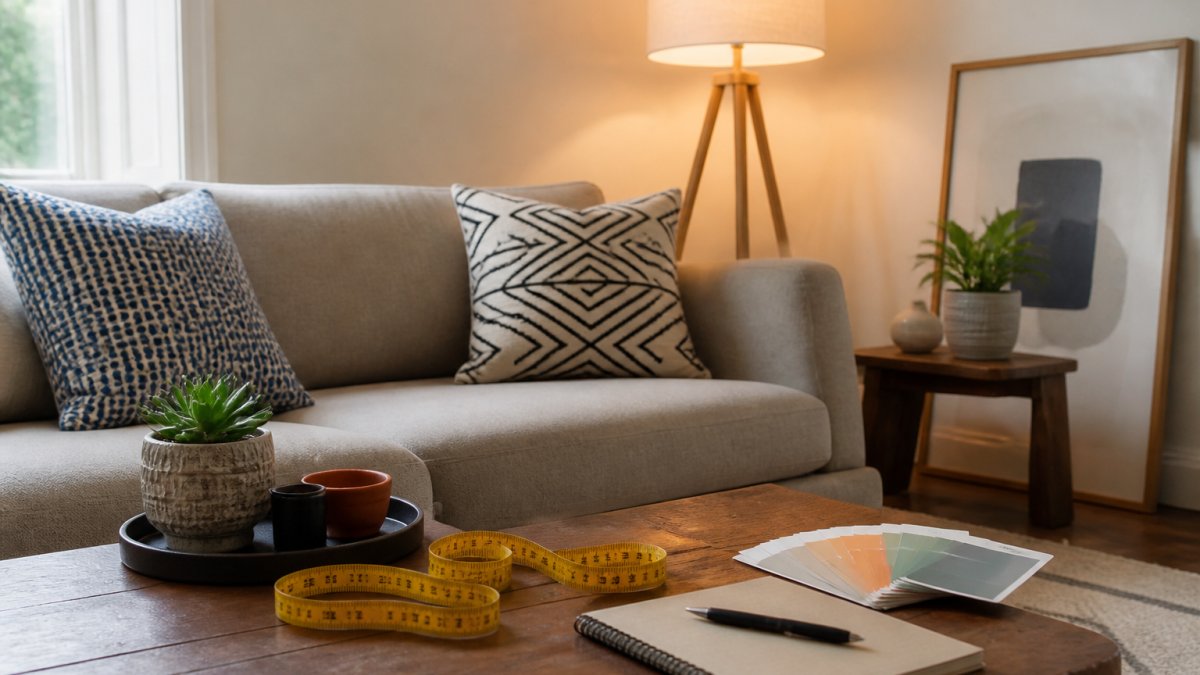
Layering Textures, Wall Art, and Lighting
Texture is what stops a neutral room from feeling like a waiting room.
Wall art does more work than any other accessory.
Lighting is the piece beginners skip. A single overhead fixture flattens a room.
For the finishing layer, our Boho Accent Pillow is the kind of piece that carries the 10 percent accent without demanding a whole new palette.

A Beginner's Step-by-Step Plan for Decorating a Whole Home
Decorate one room at a time, in this order: living room, bedroom, dining, then everything else. Trying to furnish a whole home at once produces a house that looks bought rather than lived in, and it drains the budget before you have learned what you actually like.
Here is the sequence we would follow:
- Declutter first, for one week. Remove everything you do not use. You cannot style around clutter, and decluttering is free.
- Set a total budget and split it 60/30/10. Sixty percent on the pieces you sit on and sleep on, 30 percent on storage and lighting, 10 percent on accessories and art.
- Measure every room and sketch a layout. Note door swings, radiators, and outlet positions.
- Buy the anchor pieces only. Sofa, bed, dining table. Live with them for two weeks before buying anything else.
- Add lighting second. Two lamps per main room, warm bulbs.
- Add textiles third. Rug, curtains, throw pillows. This is where color enters.
- Add art and objects last. Buy slowly, and only what you would keep if you moved.
That two-week pause after the anchor pieces is the step most people skip. It is also the step that prevents the mismatched-room problem, because it gives you time to see how the light falls and how you actually use the space.
Modern Aesthetic Decor on a Budget: Renters, Small Spaces, and Secondhand
Renters and small-space dwellers get the best return from reversible changes: lighting, textiles, art, and removable hardware.
The highest-impact moves for a rental:
- Swap the lampshades, not the lamps. Warm bulbs and a new shade change the whole mood of a room.
- Lean art instead of hanging it. No holes, and you can rearrange on a whim.
- Use a large rug to define a zone. In a studio, a rug is the wall you do not have.
Secondhand is where a budget modern room gets its character.
For the dining layer, our All the Loves Graffiti Love-Placemat Set is a practical way to add color to a rental table without committing to a new surface.

One honest limitation: trend roundups themselves note that not every trend suits every taste, and that is fine (Style by Emily Henderson on 2026 decor trends).
Decorating a whole home in a modern aesthetic is less about buying the right pieces and more about sequencing them correctly: define the style, measure before you buy, build the palette, then layer slowly. That is the approach we take at theJoyincolor, where our collection is built around color-forward accent pieces like machine-washable accent pillows, water-resistant placemat sets, and soft cotton-backed hand towels that make a room feel finished without a redesign.

Frequently Asked Questions
What is the 3-5-7 rule in decorating?
The 3-5-7 rule is a styling shortcut for arranging accessories in odd-numbered groups: three small items, five medium items, or seven items across a shelf or table. Odd numbers create visual balance because the eye does not split them into symmetrical pairs. Start with three objects of different heights, such as a vase, a stack of books, and a small sculpture, then add pieces until the group feels full but not crowded. Keep each group within one color palette so the count reads as intentional rather than cluttered.
What are good interior design basics for a beginner starting from an empty room?
Start with the largest surfaces: paint, flooring, and the main sofa or bed. Those set the color scheme and take the longest to change. Next, measure the room and mark furniture footprints with painter's tape before buying anything. Add one focal point, usually a sofa wall or a bed wall, then layer lighting at three heights: ceiling, table, and floor. Accessories and wall art come last because they are the easiest to adjust once the big pieces are in place.
How do I choose a modern aesthetic for my home without copying a catalog?
Pull three to five images you genuinely like and look for what repeats: color, material, and shape. If warm wood and cream show up in every photo, that is your base. If chrome and glass keep appearing, lean into sleek furniture and smooth lines. A 2025 study in Frontiers in Computer Science found that people build identity through home decor, mixing cultural trends with personal choices, so treat trends as options rather than rules. Buy the base pieces neutral, then express personality through pillows, art, and tabletop items you can swap later.
What should I buy first when decorating a room on a budget?
Buy the piece you sit or sleep on first, then lighting, then textiles. A sofa or mattress sets the scale for everything else, and a floor lamp or table lamp changes how a room feels more than any accessory. Textiles are the cheapest way to shift a color palette: an accent pillow at $17.13 or a hand towel at $13.63 lets you test a hue before committing to paint. Leave wall art and decorative accessories for last so you can fill actual gaps instead of guessing.
How can beginners make a room look more cohesive?
Repeat three things: color, material, and shape. Pick one metal finish and use it in lighting and frames, choose two wood tones maximum, and repeat one accent color in at least three places across the room. Keep the largest pieces neutral and let smaller items carry the pattern. Visual balance matters more than matching sets, so place a heavy dark item across from something lighter and taller. Decluttering is part of cohesion too: fewer objects with clear space between them read as curated decor rather than storage.
Is modern aesthetic decor practical for everyday use?
Yes, if you choose materials that tolerate daily life. Look for machine-washable covers on pillows, water-resistant placemats for dining tables, and fabrics with a tight weave for high-traffic seating. A woven rug or a washable cotton-backed towel handles regular use better than delicate finishes. Keep decorative accessories on shelves and trays rather than the floor, and reserve open surfaces for items you actually touch. Practical pieces styled well look intentional; fragile pieces styled well just look stressful.
How do I decorate a rental without losing my deposit?
Use reversible changes only: freestanding shelving, leaning mirrors, tension rods, removable adhesive hooks rated for the weight, and area rugs over wall-to-wall carpet. Swap hardware and lighting with plug-in fixtures you can take with you. Paint only if your lease allows it, and confirm the required repainting terms in writing first. Textiles do most of the work in rentals, so invest in throw pillows, curtains, and a rug before anything permanent. Photograph the unit before you move in so you have a record of existing damage.