

Table of Contents
- Outdated Interior Design Trends 2026: What Designers Say Is On Its Way Out
- Home Decor Trends 2026: What's Replacing the Old Guard
- Interior Design Trends 2026: What's In and Out, Room by Room
- Affordable Ways to Update Home Decor Without a Full Renovation
- Durability, Maintenance, and Everyday Livability
- Sustainability and Responsible Replacement
- Frequently Asked Questions
Last Updated: October 8, 2026
Outdated Interior Design Trends 2026: What Designers Say Is On Its Way Out
If you're asking what home trends are out for 2026, the answer starts with beige. According to Southern Living's report on decor trends designers say will be out by the end of 2026, flat beige interiors, fluted or reeded detailing, impersonal coffee-table objects, and decorative arches are all on the way out.
That doesn't mean beige is a mistake. It means a room built entirely from beige, fluting, and staged objects now reads as a showroom rather than a home. The trend didn't fail. It got copied until it stopped saying anything.
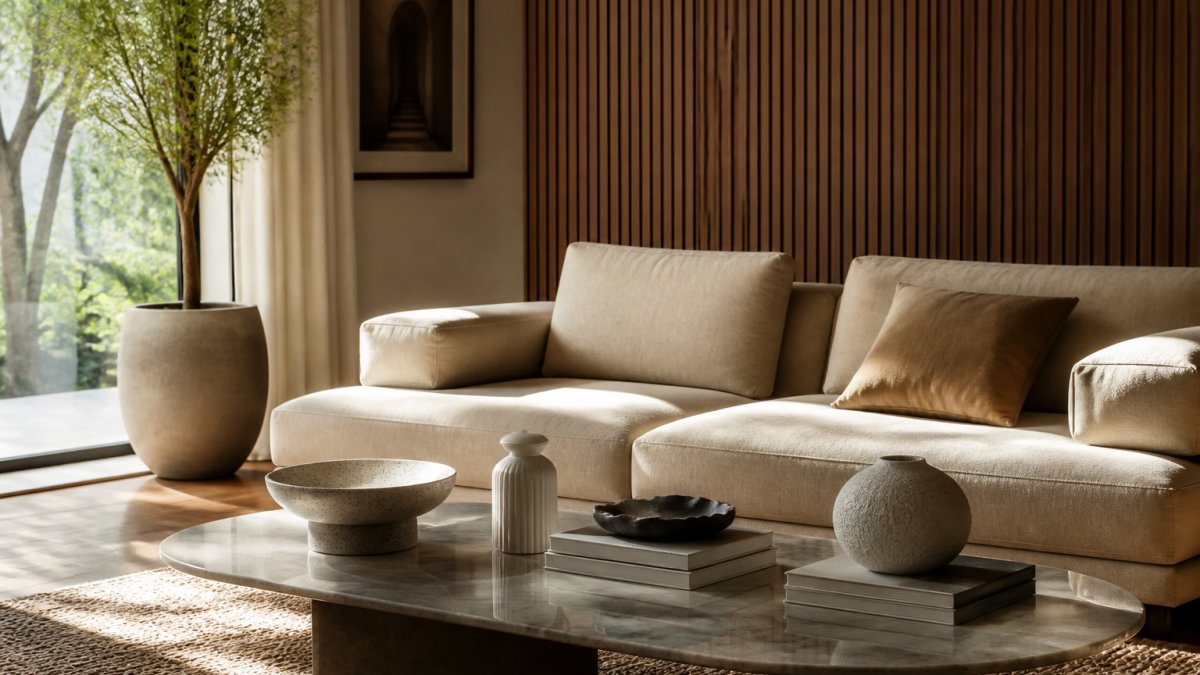
Beige Interiors and Fluted Detailing
Beige interiors and fluted detailing are the clearest casualties of the 2026 trend cycle. Both were everywhere for years, which is exactly the problem.
Fluted paneling started as a craft detail. Once it appeared on every vanity, media wall, and kitchen island, it stopped signaling taste and started signaling a template. The same goes for arches: a beautiful architectural move that became a decorative sticker applied to mirrors, shelving, and headboards.
Home Decor Trends 2026: What's Replacing the Old Guard
What's replacing the old guard is warmth with contrast. The 2026 U.S. Houzz Emerging Summer Trends Report found search interest in recycled-glass countertops up 84% and bamboo flooring up 32%, which tells you homeowners are hunting for materials with texture and a story rather than another flat finish. Warm neutrals stay, but they now sit next to real color.
Here's the honest caveat most trend roundups skip: forecast lists blend two very different things. Some items are observed shifts, search data, showroom orders, and repeat requests that designers report seeing across many projects. Others are individual predictions from a handful of voices. Treat the first group as a direction and the second as a mood board. When you read any 2026 list, ask which one you're looking at.
Warm Neutrals, More Color, and Tactile Surfaces
Warm neutrals work as a base, not the whole room. The shift is toward layering color and texture on top of them. In practice, that means:
- One saturated accent per room, in a lamp, cushion, or vase, deep olive, oxblood, terracotta, or a saturated blue rather than a pastel
- Tactile surfaces like boucle, raw linen, unlacquered metal, and hand-thrown ceramics, chosen for how they feel, not just how they photograph
- Dark woods and richer wood tones, walnut, smoked oak, and stained ash, set against pale walls for contrast
- Sumptuous textiles layered rather than matched: a wool throw over a linen sofa, a vintage rug under a modern table
This is warm minimalism with personality: fewer pieces, but each one earns its place. Maximalism and experimentation are the other end of the same idea, and both beat a room with nothing to look at.
Materials, Craftsmanship, and Forms
The material story for 2026 is texture you can touch. Recycled-glass countertops and bamboo flooring lead the search data, but the broader pull is toward surfaces with visible grain, variation, and handwork. Limewash and plaster finishes, unlacquered brass that patinas, and stone with real veining all fit. So does craftsmanship: hand-thrown pottery, hand-knotted rugs, and joinery you can see rather than veneer that hides it.
Furniture shapes follow the same logic. Sculptural forms and curved silhouettes are replacing hard-edged, boxy pieces, a rounded sofa, a pedestal table, a chair with an actual curve in the back. The point isn't novelty; it's that a curve softens a room in a way a rectangle can't.
Mediterranean-Inspired Warmth and Indoor-Outdoor Living
Two related threads run through most 2026 forecasts. The first is Mediterranean-inspired warmth: plaster walls, arched openings done as real architecture rather than applied decor, natural stone, and a palette of sun-baked earth tones. The second is indoor-outdoor living, where the line between a living room and a patio blurs, durable natural materials, outdoor rugs, and furniture that can take weather without looking like patio furniture.
Both trends reward the same instinct: build rooms that feel lived-in and connected, not staged and sealed off.
Interior Design Trends 2026: What's In and Out, Room by Room
Room by room, the 2026 shift is about softening hard surfaces and adding personal character. Most trend lists stop at a color palette; the useful version tells you what to change, what it costs, and whether you can undo it. Here's how the shift plays out in the rooms people actually live in, with the reversibility noted so you can decide how far to go.
| Room | On Its Way Out | What's Replacing It | Reversibility |
|---|---|---|---|
| Living room | Full beige palette, staged objects | Warm neutral base plus one bold accent | Easy, paint and accessories |
| Kitchen | Fluted island panels, flat slab fronts | Smooth cabinetry, recycled-glass countertops | Hard, cabinetry is a renovation |
| Bedroom | Matching furniture sets | Layered textiles, mismatched wood tones | Easy, swap bedding and one nightstand |
| Bathroom | All-white, cold finishes | Warm stone, unlacquered brass, plaster-look tile | Medium, fixtures are semi-permanent |
| Entryway | Decorative arches | Sculptural forms, curved silhouettes, mirrors | Easy, decor only |
| Outdoor | Indoor-only thinking | Indoor-outdoor living rooms, durable natural materials | Medium, furniture and rugs |
What This Means in Practice
The throughline: rooms should look collected, not purchased in one order. But the table hides a real trade-off. The changes marked easy are the ones worth making now, they're cheap, reversible, and you can live with them for a season before committing. The changes marked hard are the ones to think about for a year, because ripping out cabinetry or re-tiling a bathroom to chase a trend is how people end up renovating again in three years.
A few room-specific notes:
- Kitchen: If your island has fluted panels, you don't have to remove them. Paint them the same color as the surrounding cabinetry so the texture reads as subtle rather than as a feature. That's a weekend project, not a remodel.
- Living room: The fastest fix for a beige room isn't repainting, it's replacing the two or three objects that make it look staged. A real book, a plant you're actually keeping alive, a piece you inherited.
- Bedroom: Matching sets are the clearest 'out' item here because they read as a furniture-store display. Break the set by swapping one piece, a nightstand in a different wood tone does more than new bedding.
- Bathroom: This is where the 'out' list gets expensive. If your bathroom is all white and cold, you can warm it with a wood stool, a linen shower curtain, and a brass faucet before you consider tile.
- Outdoor: The indoor-outdoor trend is really a durability question. Choose materials that can take sun and rain, teak, powder-coated metal, solution-dyed fabrics, or you'll be replacing them every other year.
Don't renovate to follow a trend. Renovate because the room doesn't work for how you live. Trends change every two to three years; a kitchen should last fifteen.
Affordable Ways to Update Home Decor Without a Full Renovation
Affordable updates start with the smallest visible layer. You do not need new floors or cabinets to leave a trend behind.
- Swap two throw pillows for one saturated color
- Replace impersonal coffee-table objects with something you actually own
- Add one tactile surface: a linen throw, a woven basket, a stone tray
- Move one mirror to catch natural light instead of filling wall space
- Repaint one accent wall in a warm neutral, not another gray
Photograph the room before you change anything. It's the fastest way to see which pieces are doing work and which are just filling space.
Durability, Maintenance, and Everyday Livability
Durability is where trend lists usually stop being useful. A material can be beautiful and still be wrong for a household with dogs, kids, or a home office.
Recycled-glass countertops resist staining and handle heat well, but they can chip at the edges, so they suit lower-traffic kitchens better than a busy family island. Bamboo flooring is hard and quick to clean, though it dents under heavy furniture and dislikes standing water. Natural materials like stone, wool, and solid wood age visibly, which is the point: they develop character instead of showing damage.
Buy for the life you have. A sculptural lamp that survives a toddler is worth more than a perfect one that lives on a high shelf.
Sustainability and Responsible Replacement
Sustainability is not about buying a whole new room. The most responsible replacement is usually the one you don't make yet.
Before you discard anything, ask three questions:
- Can it be repainted, reupholstered, or restained?
- Can it move to a different room where it works better?
- Can it be repaired rather than replaced?
When you do buy, choose materials with a longer lifespan: solid wood over veneer, natural fiber over synthetic, classic forms over trend-driven shapes. A U.S. EPA guide to reducing waste at home makes the same case for reuse over replacement. A trend being labeled "out" doesn't mean it's wrong for your home. It means the market has moved on, and you get to decide whether you follow.
Frequently Asked Questions
What home decor trends are going out of style in 2026?
Beige interiors, fluted or reeded detailing, impersonal coffee-table items, and decorative arches are among the trends designers say will be out by the end of 2026, according to Southern Living. A trend being labeled out does not mean it is unsuitable for every home, though. Some of these looks can still feel timeless when done well, so treat trend lists as guidance rather than absolute rules.
What colors are going out of style in 2026?
Flat, all-beige color palettes are losing ground. Designers point to warm neutrals and more expressive color as the direction for 2026. Instead of layering beige on beige, the shift favors warm wood tones, Mediterranean warmth, and richer color choices that give a room more personal character. If your space feels washed out, adding one saturated accent color is a low-commitment way to test the shift.
What should I replace outdated home decor with?
Swap impersonal coffee-table stacks for objects that tell a story, and replace fluted paneling accents with natural materials and tactile surfaces like sumptuous textiles or dark woods. Search interest in recycled-glass countertops rose 84% and bamboo flooring rose 32% in the 2026 U.S. Houzz Emerging Summer Trends Report, showing homeowners are moving toward environmentally conscious materials. Focus on a few well-chosen pieces rather than replacing everything at once.
How can I update my home without a full renovation?
Start with the elements that carry the most visual weight: mirrors, lighting, textiles, and decorative accents. Layering warm textiles over existing furniture and adding sculptural forms or curved silhouettes in small doses updates a room quickly. For a budget-conscious approach, shop your own home first, then add one or two statement pieces. This keeps costs down and lets you test a direction before committing to bigger changes.
Trends will keep cycling, and the rooms that age best are the ones with a point of view. theJoyincolor curates colorful, thoughtfully designed home goods for exactly that: pieces that add vibrancy to daily routines, hold up to everyday use, and let you build a space that looks like you rather than a catalog. Browse the collection and start with one piece you genuinely love.