

Table of Contents
- What Makes Kitchen Essentials Durable: Materials and Build Quality
- Essential Kitchen Tools for Home Cooks That Actually Last
- How to Choose Durable Kitchen Tools: What to Look For
- Durable Kitchen Utensils Worth Your Investment
- Kitchen Essentials Worth Investing In: Cost Per Year
- Care and Maintenance: Extending the Life of Your Kitchen Essentials
- Which Kitchen Essential Should You Buy First?
- Frequently Asked Questions
Last Updated: October 17, 2026
What Makes Kitchen Essentials Durable: Materials and Build Quality
Durability is a piece's ability to resist the specific stresses of daily use, thermal shock, impact, repeated washing, abrasion, and chemical exposure.
Stainless steel. The relevant grades for kitchen tools are 304 (18/8) and 316; both resist rust and staining, but 316 better resists salt and acidic foods.
Wood. Wood is naturally antimicrobial when dry and can last decades, but it fails when it stays wet.
Silicone. Food-grade silicone tolerates high heat and does not leach BPA, but it can absorb odors and stains, especially from strong pigments or high-fat foods.
Textiles. For placemats, napkins, and towels, durability comes from fiber blend and construction. Polyester resists shrinking and fading; cotton absorbs and softens with use.
Construction signals that matter across materials:
- One-piece construction over glued or riveted joints in utensils.
- Hemmed or bound edges on textiles rather than cut-and-sealed edges.
- Fully vitrified ceramic with a stated dishwasher and microwave rating.
- Stated steel grade (304 or 316) rather than "stainless steel."
- Platinum-cured silicone rather than unspecified silicone.
Repairability matters too. A wooden spoon can be sanded and re-oiled; a cast iron pan can be reseasoned; a riveted stainless handle usually cannot be tightened once it loosens. Before buying, ask whether the piece can be maintained, repaired, or replaced part-by-part, because the most durable kitchen essential is often the one you can keep fixing rather than the one you have to replace.
Essential Kitchen Tools for Home Cooks That Actually Last
Home cooks need tools that survive daily use without breaking, warping, or losing function. The best durable kitchen utensils aren't fancy, they're reliable.
Start with ceramics for everyday items. The All the Loves Graffiti Love-Black Glossy Mug at $12.63 is glossy-finished, dishwasher-safe, and built from lead-free ceramic, so it won't degrade or leach chemicals over years of use.
For table settings, cloth napkins and placemats outperform disposables long-term. The All the Loves Graffiti Love-Placemat Set ($40.52) uses water-resistant, two-ply construction with hemmed edges that prevent unraveling and extend lifespan by years. Four pieces per set means you have backups while one set is washing.

Polyester-cotton blends work well for textiles. The Salt Marsh Hand Towel ($13.63) mixes 52% polyester with 48% cotton: the polyester front stays vibrant and durable, while the cotton back absorbs moisture.

| Material | Best For | Lifespan | Care Level |
|---|---|---|---|
| Ceramic | Mugs, dishes, bowls | 5-10 years | Dishwasher-safe, easy |
| Polyester broadcloth | Placemats, napkins | 3-5 years | Machine wash, quick dry |
| Polyester-cotton blend | Hand towels | 2-3 years | Cold water wash, avoid heat |
| Stainless steel | Utensils, cookware | 10+ years | Hand wash preferred |
How to Choose Durable Kitchen Tools: What to Look For
Choosing durable kitchen essentials worth investing in means knowing what signals quality. Look for these markers.
First, check the material composition. If a product lists materials clearly, ceramic, polyester, cotton percentages, the manufacturer is confident in the piece. Vague descriptions like "durable material" or "quality construction" often hide shortcuts.
Second, examine construction details. Hemmed edges, sewn seams, and two-ply fabric construction add cost but extend lifespan dramatically. A placemat with hemmed edges stays intact through dozens of washes; unhemmed edges fray within months.
Third, consider heat resistance and dishwasher safety. A dishwasher- and microwave-safe claim means the glaze won't crack and the material won't degrade under temperature changes.
Fourth, think about repairability. Can you replace a handle or reorder matching pieces? Products from established brands are easier to repair or match later.
Durable Kitchen Utensils Worth Your Investment
The utensils that survive years of daily cooking share a few design traits, and almost none are about brand, they're about how the tool is made and what it's made of. Understanding those traits lets you evaluate any utensil, not just the ones featured here.
What separates a durable utensil from a disposable one:
- One-piece construction. A stamped or molded utensil with no joint between head and handle cannot loosen, harbor moisture, or snap at the connection point. Riveted and glued handles are the most common failure point in spatulas and turners.
- Correct material for the task. Silicone for high-heat contact with nonstick surfaces, stainless steel for strength and rigidity, wood for gentle contact with nonstick and cast iron. Using the wrong material for the job is the fastest way to destroy a good tool.
- Stated heat tolerance. Food-grade silicone is typically rated to 450-500°F, but the rating should be printed on the packaging or product page. An unrated silicone spatula is a gamble.
- Thickness where it matters. A thin silicone spatula head flexes and tears at the blade edge; a thicker head holds its shape. A thin stainless turner bends under a heavy burger; a thicker one does not.
- Handle ergonomics and grip. A handle that is too smooth or too short forces you to grip harder, which accelerates wear at the joint and increases the chance of dropping the tool.
Material trade-offs to weigh:
| Material | Strength | Weakness | Best use |
|---|---|---|---|
| Silicone (platinum-cured) | Heat resistance, nonstick-safe | Can absorb odors and stains | Spatulas, scrapers, baking mats |
| Stainless steel (304/316) | Rigid, rust-resistant, long-lived | Can scratch nonstick surfaces | Tongs, turners, whisks, ladles |
| Wood (end-grain) | Gentle on nonstick, naturally antimicrobial when dry | Requires oiling, cannot be dishwashed | Spoons, spatulas, cutting boards |
| Nylon | Cheap, nonstick-safe | Degrades and warps above ~400°F | Budget spatulas and serving tools |
How to evaluate a utensil before you buy it:
- Check the joint. If there is a seam between head and handle, flex it gently. Any movement is a future failure point.
- Look for a stated heat rating on silicone and nylon tools. No rating means no verified tolerance.
- Confirm the steel grade on metal tools. "Stainless steel" alone is not a grade.
- Check whether the tool is dishwasher-safe. Many wooden and some silicone tools are not, and dishwasher heat degrades them faster than hand washing.
- Consider repairability. Wooden tools can be sanded and re-oiled; a cracked silicone head usually cannot be repaired, only replaced.
A note on the products in this guide. The ceramic mugs, placemats, napkins, and hand towels featured elsewhere are table and serving essentials rather than cooking utensils, evaluated on the criteria above: lead-free ceramic, two-ply hemmed textiles, and stated fiber blends. For cooking utensils, apply the joint, material, and heat-rating checks before buying, and prefer tools you can maintain rather than tools you will have to replace.
All the Loves Graffiti Love-Placemat Set →
Kitchen Essentials Worth Investing In: Cost Per Year
True durability reveals itself through cost-per-year math: a piece that costs more upfront but lasts longer saves money over time.
Consider a ceramic mug. A quality mug costs $10-13 and lasts 8-10 years with normal use, roughly $1.20-1.50 per year.
The All the Loves Graffiti Love-Placemat Set ($40.52) includes four pieces. If each lasts 4-5 years, that's $10.13 per placemat per year, or roughly $2-2.50 per use across 100+ dinner settings.
Cloth napkins follow the same logic. The All the Loves Graffiti Love-Cloth Napkin Set ($35.04) for four napkins costs $8.76 per napkin. Used twice weekly for 3-4 years, that's roughly $0.08 per use.

The hand towel investment works similarly. The Salt Marsh Hand Towel ($13.63) lasts 2-3 years with proper care, roughly $4.50-6.80 per year, or about $0.01 per use across 500+ uses annually.
Care and Maintenance: Extending the Life of Your Kitchen Essentials
How you care for durable kitchen essentials determines whether they reach their full lifespan or fail early. Proper maintenance is the difference between a five-year piece and a ten-year piece.
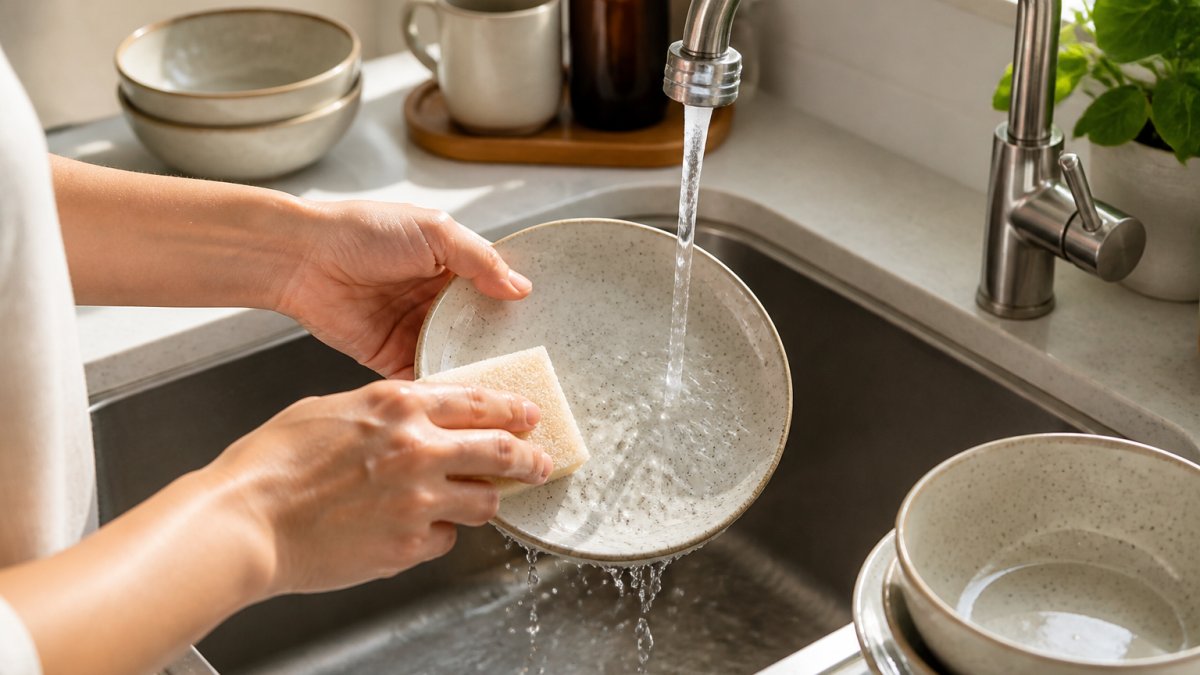
For ceramic items, use cold water when possible; hot water can cause thermal shock and cracking over time.
For polyester and cloth items, machine wash in cold water. The Salt Marsh Hand Towel specifically notes: avoid bleaching, ironing, dry cleaning, or heat drying. The All the Loves Graffiti Love-Placemat Set and napkin set benefit from the same approach, cold water, gentle cycle, air dry.
Store items properly. Don't stack heavy cookware on delicate pieces. Keep textiles in dry spaces away from direct sunlight, which fades colors.
Address damage early. A small chip in ceramic won't grow if you sand it smooth. A loose thread on cloth items can be trimmed before unraveling spreads. Small repairs now prevent total loss later.
Which Kitchen Essential Should You Buy First?
Start with items you use daily. Everyday pieces generate the most value from durability because you experience the benefit constantly.
For most home cooks, that means a quality mug or set of bowls used multiple times per day. A durable ceramic mug like the All the Loves Graffiti Love-Black Glossy Mug ($12.63) or the Boho Flowers-Black Glossy Mug ($10.50) pays dividends immediately; you notice the difference every morning.
Next, invest in table linens if you entertain or eat at a table regularly. The All the Loves Graffiti Love-Placemat Set ($40.52) protects your table and elevates every meal. Four pieces means you always have a clean set available.
Then add cloth napkins and hand towels. The All the Loves Graffiti Love-Cloth Napkin Set ($35.04) and Salt Marsh Hand Towel ($13.63) complete the everyday essentials used for washing hands, wiping spills, and setting the table.
Finally, expand with specialty items. Additional mugs in different designs, extra napkins, or coordinating pieces extend your collection without breaking the budget.
The key is starting with what matters most to your lifestyle, then building outward. Durability compounds when pieces work together and are used consistently.
Building a kitchen of durable essentials means choosing pieces that last years, not months. Start with one quality piece today, and you'll understand why investing in durability saves money and stress over time. Explore our collection of durable kitchen essentials and discover how thoughtful design meets lasting quality.
Frequently Asked Questions
What materials make the best durable kitchen essentials?
Ceramic, stainless steel, and high-quality polyester are top performers. Ceramic mugs like the All the Loves Graffiti Love-Black Glossy Mug ($12.63) are lead and BPA-free, dishwasher and microwave safe, and resist chipping with proper care. Polyester fabric in placemats and napkins, when sewn with two-ply construction like the All the Loves Graffiti Love-Placemat Set ($40.52), provides water resistance and shape retention through repeated washing. Cotton-blend towels offer absorbency and longevity.
How can you tell if kitchen tools are durable before buying?
Check for stitching quality (hemmed on all sides, two-ply seams), material composition (ceramic vs. plastic, natural fibers vs. synthetics), and care instructions that allow regular use without damage. Products rated for dishwasher and microwave use typically withstand daily wear. Look for weight and finish, glossy ceramic feels substantial and resists fading. Read whether items are BPA-free and lead-free, which indicates manufacturing standards. Sets with multiple pieces sewn or assembled together should show reinforced seams.
Are durable kitchen essentials worth the higher price?
Yes, when calculated over time. A ceramic mug at $12.63 lasts 5+ years with daily use, costing about $2.50 per year. Budget alternatives often chip, fade, or crack within 12 months, requiring replacement. Water-resistant placemats ($40.52 for four) survive hundreds of washes without staining or warping, whereas cheap alternatives absorb spills and degrade quickly. Investing upfront in quality means fewer replacements, less waste, and consistent performance in your kitchen routine.
How do you care for kitchen tools so they last longer?
Machine wash ceramics in cold water on gentle cycles to prevent chipping; avoid bleach and heat drying. For polyester items like napkins and placemats, cold water (max 90°F/30°C) and air drying preserve color and water resistance, never use heat or bleach. Hand-wash delicate prints when possible. Store items flat or stacked carefully to avoid pressure damage. Inspect seams and finishes regularly for wear and address small issues before they spread. Proper storage away from extreme temperatures extends fabric and ceramic life significantly.