

Table of Contents
- Christmas Decorations: How to Plan Before You Buy
- Christmas Tree Decorations: Artificial vs. Real Trees
- Christmas Wreaths and Garlands: Front Door to Mantel
- Christmas Decorating Ideas for Small Spaces and Renters
- Christmas Decoration Trends 2026: What Buyers Are Choosing
- Lights, Energy, and Safety: What to Know Before You Buy
- Budgeting for Christmas Decorations: Where to Spend and Save
- Conclusion: Build a Collection You'll Reuse
- Frequently Asked Questions
Last Updated: October 6, 2026
Christmas Decorations: How to Plan Before You Buy
Planning Christmas decorations starts with three decisions: where each piece will go, how long it should last, and what you'll store it in.
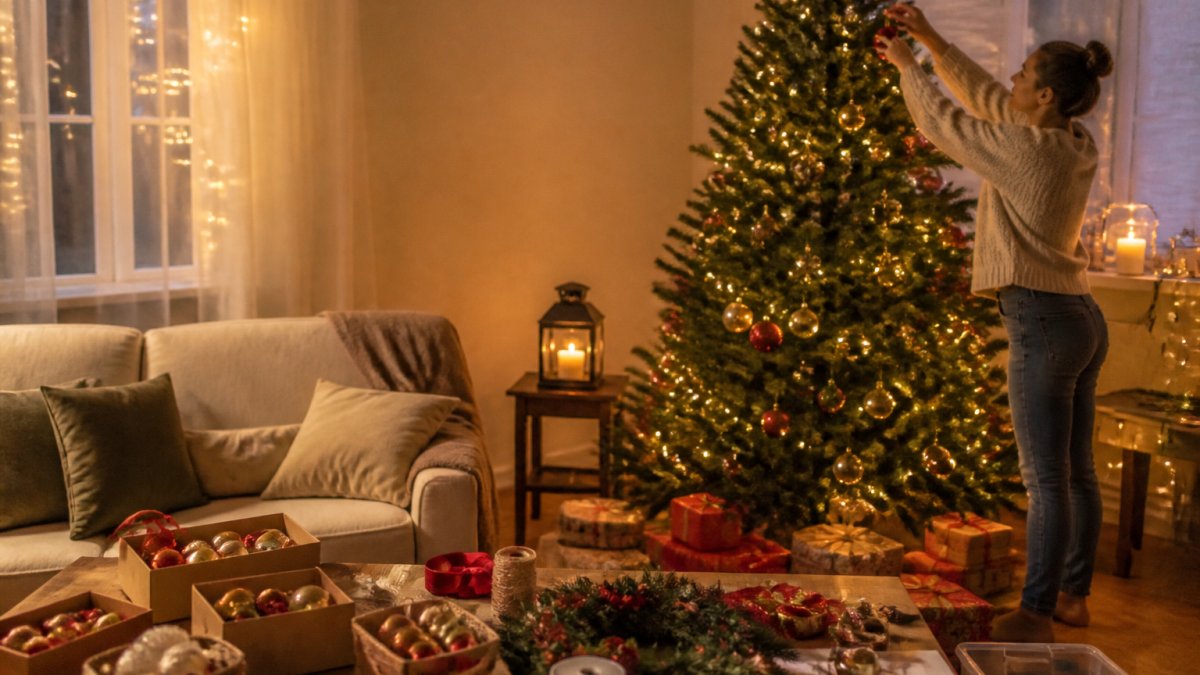
This guide from theJoyincolor walks through trees, ornaments, wreaths, garlands, and lights, with the trade-offs that matter at the checkout, so you can build a collection you'll reuse for years.
Buying Christmas decorations differs from buying most home goods: you use them for six weeks, store them for ten months, and judge them by how they look under warm light.
Christmas Tree Decorations: Artificial vs. Real Trees
The best Christmas tree decorations depend on your tree type: artificial trees hold heavier ornaments on sturdier wire branches, while real trees need lightweight pieces and gentler clips. Decide the tree first, then buy ornaments to match it.
Artificial Trees: What to Check Before Buying
Artificial trees reward buyers who check three things in the store: branch density, hinge type, and the stand.
- Branch density: More tips per foot means fuller coverage. A sparse tree shows gaps no ornament can hide.
- Hinged vs. hooked branches: Hinged branches fold down and set up faster. Hooked branches take longer but pack flatter.
- Stand quality: A wobbly stand ruins the whole setup. Check that the base is wide and the bolts tighten firmly.
Pre-lit trees save setup time but lock you into their bulbs. If a strand fails, the whole tree has a dark patch. Unlit trees cost less and let you choose your own lights.
Real Trees: Practical Considerations
Real trees bring scent and authenticity but demand more planning: a fresh cut at the base, a water-holding stand, and daily watering the first week.
Check the tree before buying: run a hand along a branch and needles should stay put. A tree already dropping needles won't last the season.
If you go real, plan your ornaments around lighter pieces. Glass baubles and heavy figurines can drag branches down.
Christmas Wreaths and Garlands: Front Door to Mantel
Wreaths and garlands extend your decorating beyond the tree, and both are sized by the space they fill. A wreath that looks generous on a standard door can look lost on a wide double entry. Material and weather matter most: what a wreath is made of determines whether it survives a wet front door or a heated indoor mantel.
Wreaths: Sizing, Material, and Placement
A front-door wreath should span roughly half the width of the door. On a standard 36-inch door, that's usually a 24-inch wreath. For interior doors, mantels, and windows, 12- to 18-inch sizes work better.
Material matters more than size for a front door:
- Natural evergreen (fresh): Smells great and looks authentic, but dries out in heated entryways and drops needles. Expect two to four weeks of good appearance indoors; less in a warm, dry room. Keep it away from direct heat.
- Artificial PVC or PE: PE (polyethylene) needles look more realistic and hold shape better than older PVC. Both are weather-resistant and reusable for years. This is the practical default for an exposed front door.
- Grapevine or twig base: A bare vine wreath is a frame you decorate yourself. It's lightweight, stores flat, and lets you swap ribbon and picks each year.
Hang wreaths with an over-the-door hook if you rent, or a screw-in hook if you own the door. Avoid adhesive hooks on painted doors in cold weather; they fail when temperatures drop.
Garlands: Where They Work Best
Garlands are the most flexible piece in a Christmas decorating kit: drape them along a mantel, up a stair rail, or above a doorway. Match the garland's fullness to the surface, a thin garland disappears against a wide mantel, while a thick one overwhelms a narrow rail.
A few specifics that separate a good garland setup from a messy one:
- Length and swag: A mantel garland should be about one and a half times the mantel length so it can swag rather than stretch straight. A 6-foot mantel usually needs a 9-foot garland.
- Lighted vs. unlit: Pre-lit garlands save time but lock you into their bulbs and a single plug location. Unlit garlands let you add your own LED strand and route the cord where you want it.
- Indoor vs. outdoor rating: Only use garlands labeled for outdoor use outside. Indoor fabric and felt garlands absorb moisture and can mildew.
Consider how you'll attach it before you buy; a garland that can't be secured cleanly ends up draped over furniture instead of where you intended.
Christmas Decorating Ideas for Small Spaces and Renters
Small-space and renter-friendly decorating comes down to three moves: go vertical, use removable fixings, and pick pieces that store flat. A tiny apartment can look fully decorated without a single hole in the wall.
- Vertical trees: Slim and pencil trees fit corners and narrow alcoves where a full tree won't.
- Wall trees: A flat tree shape mounted on the wall gives the look of a tree without the footprint.
- Tabletop trees: Ideal for studios and desks. A small tree with a few well-chosen ornaments reads as intentional, not scaled down.
Renters should avoid drilling, painting, or permanent adhesive. If you must attach something to a wall, test the adhesive on an inconspicuous spot first.
Christmas Decoration Trends 2026: What Buyers Are Choosing
Christmas decoration trends in 2026 lean toward nostalgia, warm minimalism, and reusable materials, with buyers choosing fewer, better pieces over large disposable sets.
The strongest shift is toward color-led themes rather than mixed assortments. Instead of buying a bit of everything, shoppers pick a scheme, such as warm neutrals, deep jewel tones, or a single accent color, and build the tree, wreath, and garland around it.
How to Adopt a Trend Without Regretting It
Trends are cheap to follow and expensive to over-commit to. A practical approach:
- Anchor in neutrals, accent in trend colors. Buy the tree, lights, and core ornaments in colors you'll still like in five years. Express the trend through ribbon, picks, and a few accent ornaments that cost little to replace.
- Buy one trend piece, not a set. A single statement item (a themed tree topper, a distinctive garland) reads as intentional. A full themed set reads as dated the moment the trend passes.
- Check the trend against your storage. A trend that requires a new storage bin or a bigger tree is a bigger commitment than it looks.
Reusable and Sustainable Decorations
Sustainable and reusable decorations are gaining ground for a practical reason, not just an ethical one. Felt, wood, fabric, and ceramic ornaments outlast thin plastic, and they photograph better under warm light. Ribbon and fabric garlands can be rewound season after season.
A few concrete choices that pay off:
- Felt and wool ornaments: Soft, lightweight, and safe around young children and pets. They won't shatter if dropped.
- Wood and ceramic: Heavier and better suited to sturdier artificial branches than to delicate real-tree limbs.
- Fabric ribbon over plastic tinsel: Ribbon can be re-rolled and reused; tinsel sheds and tangles.
Timing: When Trends Actually Hit the Shelf
Most new seasonal collections appear from late September through October, with the widest selection before Thanksgiving. By mid-December, popular pieces sell out and remaining stock is picked over. Buy a specific trend piece early; buy after the season ends for a deal.
For a coordinated look without overspending, pick two or three colors and repeat them across every piece. That single decision does more for a room than doubling the number of ornaments.
Lights, Energy, and Safety: What to Know Before You Buy
LED lights are the right default for most buyers: they run cooler, use less power, and last far longer than incandescent strands.
Before buying, check three things:
- Indoor or outdoor rating: Only use strands labeled for outdoor use outside. Indoor-only lights are not built to handle moisture.
- Connectivity: Check how many strands can be linked end to end. Exceeding the limit is a common cause of overloaded circuits.
- Certification: Look for a recognized safety testing mark on the packaging, which indicates the strand has been tested to applicable standards.
For outdoor decorating, use clips rated for gutters and rooflines rather than staples or nails, which can pierce wiring.
Solar lights suit paths, shrubs, and fence lines where running a cord is impractical. They charge by day and switch on at dusk, though output drops on heavily overcast days.
Budgeting for Christmas Decorations: Where to Spend and Save
Budgeting for Christmas decorations works best when you split your list into permanent and disposable pieces: spend on what you'll reuse for a decade, save on what you'll replace anyway.
Where to spend:
- Tree: The single piece you'll live with longest. Buy the best one you can store.
- Core ornaments: A set of well-made baubles in your chosen colors anchors every future tree.
- Quality lights: LED strands that survive storage pay for themselves in a few seasons.
Where to save:
- Filler ornaments: Cheap baubles fill gaps at the back of the tree where nobody looks closely.
- Tinsel and disposable trim: Fine for a single season, but don't build your scheme around it.
- Trend pieces: Buy one or two accent items rather than a full themed set.
| Category | Spend or Save | Why |
|---|---|---|
| Tree | Spend | Used every year, hard to replace cheaply |
| Core ornaments | Spend | Sets the color scheme for everything else |
| LED lights | Spend | Lower running cost, longer lifespan |
| Filler baubles | Save | Mostly hidden at the back of the tree |
| Tinsel and trim | Save | Short-lived and easily replaced |
| Trend accents | Save | One or two pieces is enough |
To keep costs down, buy after the season ends when retailers clear stock. Storage quality matters as much as purchase quality, so pack ornaments in divided boxes and coil lights loosely rather than cramming them.
Conclusion: Build a Collection You'll Reuse
The challenge with Christmas decorations isn't finding pieces you like. It's building a set that survives storage, fits your space, and still looks intentional next December.
At theJoyincolor, we curate home goods chosen for color, quality, and everyday appeal, and the same logic applies to seasonal decor.
Get started with theJoyincolor and build a collection you'll actually want to unpack next year.
Frequently Asked Questions
What do I need to decorate my home for Christmas?
Start with a tree and a set of lights, then add ornaments, a tree topper, and a tree skirt. For the rest of your home, wreaths and garlands cover doors, mantels, and stair rails. Outdoor decorations like inflatables or solar lights extend the display. Before buying, measure your space and decide on a color scheme so each piece works together. A practical approach is to buy in stages: tree and lights first, then ornaments and accents as your budget allows.
How do I choose a Christmas decorating theme?
Pick a color scheme and a style, then repeat both across every element. For example, a red-and-white theme with plaid ribbons and wooden ornaments reads traditional. A silver-and-blue scheme with glass baubles and white fairy lights feels modern. Decide on one or two colors and stick to them for the tree, wreaths, and table settings. This consistency makes a collection of individual pieces look intentional rather than random.
How can I decorate for Christmas on a budget?
Focus on high-impact items first: lights, a tree skirt, and a wreath. Buy ornament sets rather than individual pieces, and look for multi-packs of baubles or shatterproof ornaments. Reuse what you already own by swapping ribbon colors or adding new picks to an old wreath. After the season, buy discounted items for the next year. Spreading purchases across a few years builds a full collection without a single large expense.
What are the current trends in Christmas decorations?
Recent trends lean toward nostalgic, traditional looks with natural textures like wood, wool, and greenery. Sustainable and reusable decorations are also growing, with buyers choosing quality pieces that last multiple seasons. Color-wise, warm metallics, deep greens, and classic red remain popular, while some buyers mix in unexpected accents like blush or copper. Small-space and renter-friendly options, such as tabletop trees and adhesive hooks, continue to gain attention.