

Table of Contents
- The Real Cost of Cheap Versus Expensive Home Decor
- Why Quality Home Decor Lasts Longer: Craftsmanship and Materials
- How to Spot High Quality Furniture and Decor Items
- Cost Per Use Home Decor Calculation: The Math Behind the Investment
- Resale Value and Long-Term Financial Returns
- When Expensive Home Decor Actually Delivers Value
- The Trap of Trend-Driven Spending and Intentional Design
- Conclusion
- Frequently Asked Questions
Last Updated: September 1, 2026
The Real Cost of Cheap Versus Expensive Home Decor
High-end furniture retains 40-60% of its purchase price in secondary markets, while mass-produced items typically resell for just 10-20% of their original cost. That gap reflects durability, materials, and actual value. The average American spends $2,752 annually on home decor, according to Verra Luxe Home's 2025 spending report, yet Americans waste roughly $8.7 billion yearly on trend-driven items abandoned within a year, generating 12.1 million tons of furniture waste annually.
The U.S. home decor market was valued at $191.5 billion in 2025 and is expected to reach $257.0 billion by 2034, according to IMARC Group's market analysis. This growth reflects rising consumer interest in home personalization, but not necessarily smarter spending. The real question is whether what you're buying will still matter to you in five years.
Why Quality Home Decor Lasts Longer: Craftsmanship and Materials
Quality craftsmanship is the difference between a sofa frame made from kiln-dried hardwood with eight-way hand-tied springs and one built from particleboard with stapled webbing. One will support you for 15 years. The other will sag noticeably within three.
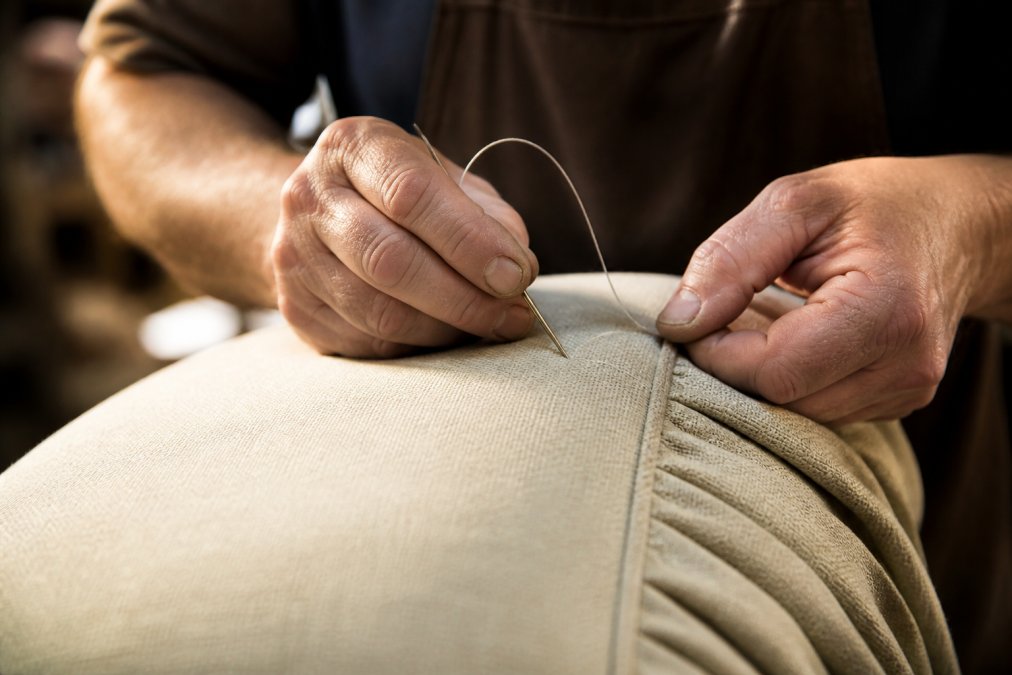
Homeowners increasingly seek furniture showing careful attention to detail: selected materials, precise construction, refined finishes, and durable design. The number of professional upholsterers in the U.S. reached 25,740 as of May 2023, a 2% increase over the previous year, according to the U.S. Bureau of Labor Statistics. This growing demand for repair and restoration signals that people invest in fixing quality pieces rather than replacing them.
Expensive decor items made with intention use materials that age gracefully. Solid hardwood darkens and develops character. Linen softens with washing. Leather patinas. Mass-produced alternatives fade, pill, and deteriorate. A quality sofa still supports properly at year ten. A cheap one collapses into itself.
How to Spot High Quality Furniture and Decor Items
Not every expensive piece is well-made. Price alone doesn't guarantee quality, but specific markers separate intentional design from marketing hype.
Start with the frame. Hardwood frames (oak, maple, walnut) hold joinery better than softwood or engineered wood. Look for mortise-and-tenon joints rather than dowels or pocket screws. These joints lock pieces together mechanically; dowels rely on glue alone, which fails over time.
For upholstered pieces, foam density matters. Anything below 1.5 pounds per cubic foot is budget foam that compresses quickly. Quality furniture uses 2.0-2.5 pound foam or higher. Check the tag, good manufacturers list this.
Stitching tells a story. Hand-stitched seams are tighter and more durable than machine-stitched ones. Look at button tufting: are buttons secured through the frame with knotted thread, or stapled to the surface? Knotted thread holds; staples fail.
Hardware should move smoothly. Open a drawer on an expensive piece, it glides. Cheap furniture has hardware that catches and wears out. Quality finishes are hand-applied in multiple coats and develop a patina rather than peeling off.
Cost Per Use Home Decor Calculation: The Math Behind the Investment
Cost-per-use is the most honest way to evaluate whether expensive home decor is worth it.
A quality pillow from theJoyincolor costs $17.13 for pieces like the Mothers Day Accent Pillow. If you use it daily for five years (1,825 days), your cost per use is $0.009 per day.

For a sofa: a budget sofa costs $800 and lasts four years ($0.55 per day), while a quality sofa costs $3,500 and lasts 15 years ($0.64 per day). The difference is minimal, but the quality sofa still looks good at year 10 while the budget sofa falls apart.
| Item | Budget Cost | Premium Cost | Expected Life | Budget Cost/Day | Premium Cost/Day |
|---|---|---|---|---|---|
| Throw Pillow | $20 | $17.13 | 5 years | $0.011 | $0.009 |
| Dining Chair | $150 | $600 | 4 years vs. 12 years | $0.103 | $0.137 |
| Area Rug | $200 | $1,200 | 5 years vs. 15 years | $0.110 | $0.220 |
| Sofa | $800 | $3,500 | 4 years vs. 15 years | $0.548 | $0.636 |
Expensive decor isn't always more expensive when you factor in longevity. A $1,200 rug lasting 15 years costs less per day than a $200 rug needing replacement every five years.
Resale Value and Long-Term Financial Returns
Quality pieces hold value in ways cheap ones never will. A $3,500 sofa might resell for $1,400-$2,100. An $800 sofa might fetch $80-$160, if anyone wants it at all.
This matters if you move frequently or change design preferences. You can sell quality pieces and recover significant money. With cheap furniture, you're better off donating it. The global luxury home decor market was worth $144.35 billion in 2024 and is predicted to grow to $216.05 billion by 2034, according to Fortune Business Insights' 2025 luxury market analysis, reflecting sustained demand for quality pieces.
Vintage and antique furniture often appreciates. A mid-century modern credenza purchased for $800 in 2010 might sell for $1,200 today. You're not just buying something to use, you're buying something you might pass along, sell, or give away without financial loss.
When Expensive Home Decor Actually Delivers Value
Expensive home decor is worth it in specific contexts.
Foundational pieces: Invest heavily in items you use daily and will keep for years, a sofa, bed, dining table, or area rug. These anchor a room. 59% of surveyed people agreed that mattresses are worth splurging on, according to House Digest's 2022 survey. You spend a third of your life on a mattress. Quality matters.
Visible focal points: If something is prominently displayed, it should be beautiful and well-made. An accent pillow, statement rug, wall art, or sculptural side table influences your mood and satisfaction with your home daily.
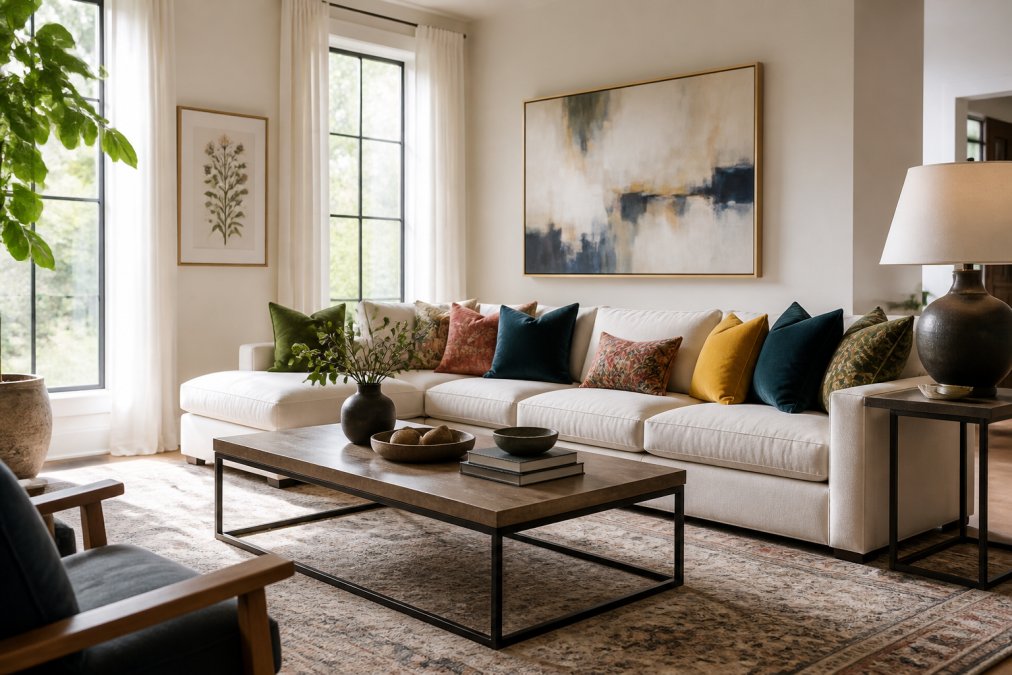
Items that show craftsmanship: Handmade ceramics, custom upholstery, bespoke woodwork, or artisan finishes carry the maker's skill and intention. Abner Henry debuted two luxury furniture collections in October 2024, offering substantial personalization with over 600 wood finishes, 10 wood species, and 50 metal color possibilities.
Pieces with emotional significance: A vintage table inherited from family, a painting by an artist you love, or a rug from a place you've traveled carry meaning beyond material cost.
Functional pieces that improve daily life: A quality desk supporting proper posture, a genuinely comfortable reading chair, organized storage, and functional lighting improve your actual experience of your home.
Don't spend heavily on purely decorative, trendy pieces you don't genuinely like. A $400 vase you tolerate is worse than a $40 vase you love.
The Trap of Trend-Driven Spending and Intentional Design
The home decor industry thrives on trends. Millennials now represent 37% of furniture-buying households in the U.S., making them the largest demographic driving the market. Trend-driven spending feels productive but often results in buying things with short shelf lives, both functionally and aesthetically.
Intentional design starts with what you actually like, what serves your life, and what will age gracefully. U.S. household spending on large home purchases slowed in 2025 as consumers reallocated dollars toward repairs, upkeep, and smaller purchases, according to Consumer Edge's 2026 report. This shift signals a maturation in how people think about home investment.
Quiet luxury represents a philosophical shift, emphasizing subtle elegance through materials and textures rather than volume and visibility. That mindset produces better purchasing decisions because it prioritizes quality and restraint.
The best home decor spending combines intentional design with quality materials. You're not chasing trends but building a space that reflects who you are and supports how you actually live.
Conclusion
Expensive home decor is worth it when it solves a real problem, serves a genuine function, or brings lasting joy to your daily life. Quality pieces hold value, last longer, and cost less per day of use than cheap alternatives.
If you're ready to invest in pieces that truly matter, theJoyincolor offers curated home decor designed to bring vibrancy and lasting aesthetic appeal to your space. Our collection focuses on quality and thoughtful design, ensuring every item serves as a genuine addition to your lifestyle rather than a temporary trend. Explore pieces like our Mothers Day Accent Pillow ($17.13) or Graffiti Love Placemat Set ($40.52) that combine aesthetic appeal with durability. Start building a home you'll love for years to come.

Frequently Asked Questions
Q: Does expensive home decor actually increase home resale value?
High-end furniture and decor can boost perceived home value, but resale impact depends on quality and timelessness. Premium pieces retain 40-60% of purchase price in secondary markets, while mass-produced items typically resell for 10-20%. Neutral, well-crafted pieces with broad appeal add more value than trendy or niche designs. Focus on foundational items like sofas and dining furniture rather than decorative accessories.
Q: How do I calculate cost per use for home decor items?
Divide the item's price by how many times you'll use or view it annually, then multiply by expected lifespan. Compare cost-per-use across similar items to identify true value, expensive doesn't always mean better value.
Q: What materials and construction details indicate high-quality home decor?
Look for solid hardwood frames (not particleboard), eight-way hand-tied springs in upholstered furniture, and natural fabrics like cotton or linen blends. Check stitching quality, tight, even seams indicate craftsmanship. Hardware should feel substantial, and finishes should be smooth without drips or rough edges. Avoid items with visible glue residue or loose joints. Request detailed material specifications before purchasing online to confirm quality claims.
Q: Is expensive home decor worth it if I love bold colors and trends?
Trendy items are risky investments regardless of price. Americans waste $8.7 billion yearly on trend-driven decor abandoned within a year. If you love color and trends, spend moderately on accent pieces like pillows ($17.13) or textiles that are easy to swap out. Reserve expensive investments for neutral, timeless foundational pieces. This hybrid approach lets you experiment with aesthetics without committing significant money to pieces that may feel dated in months.
This article was written using GrandRanker