

Table of Contents
- Maximalist vs Minimalist Home Decor: Core Philosophies
- Maximalist Living Room Ideas: Creating Visual Interest
- Minimalist Living Room Ideas: Intentional Simplicity
- Color Palettes: Bold Maximalism vs Neutral Minimalism
- How to Mix Maximalist and Minimalist Decor
- Practical Considerations: Budget, Maintenance, and Small Spaces
- Which Style Is Right for Your Home
- Frequently Asked Questions
Last Updated: October 10, 2026
Maximalist vs Minimalist Home Decor: Core Philosophies
The choice between maximalist and minimalist design fundamentally shapes how you curate and experience your home. Maximalist vs minimalist home decor styles represent two contrasting philosophies about what makes a space feel like home, and how you want to live day-to-day.
Maximalism embraces the philosophy of "more is more." It celebrates abundance, personal expression, and layered visual richness. Minimalism, by contrast, follows "less is more", prioritizing intentionality, open space, and carefully curated selections. Neither approach is inherently superior; the right choice depends on your lifestyle, values, and how you want your environment to support your daily life.
What Maximalism Means
Maximalism values accumulation, personal storytelling, and sensory richness. A maximalist space is densely layered with colors, patterns, textures, and objects that reflect the inhabitant's interests, travels, and experiences.
In a maximalist home, bold colors, mixed patterns, and layered objects tell a personal story. Furniture silhouettes vary, shelves overflow with decorative pieces, and textiles layer generously. The philosophy assumes thoughtful abundance creates comfort and joy.
What Minimalism Means
Minimalism operates from a different premise: clarity and intentionality create calm and focus. A minimalist space contains only what serves a purpose or brings genuine joy, with neutral palettes, simplified furniture, and few deliberately chosen objects.
Minimalism is about editing ruthlessly so every item earns its place, creating a serene environment that reduces decision fatigue and promotes mental calm.
Maximalist Living Room Ideas: Creating Visual Interest
The maximalist living room celebrates color, pattern, and personality. Start with bold base colors, deep jewel tones like emerald or sapphire, then layer patterns confidently: geometric prints with florals, stripes with paisleys.
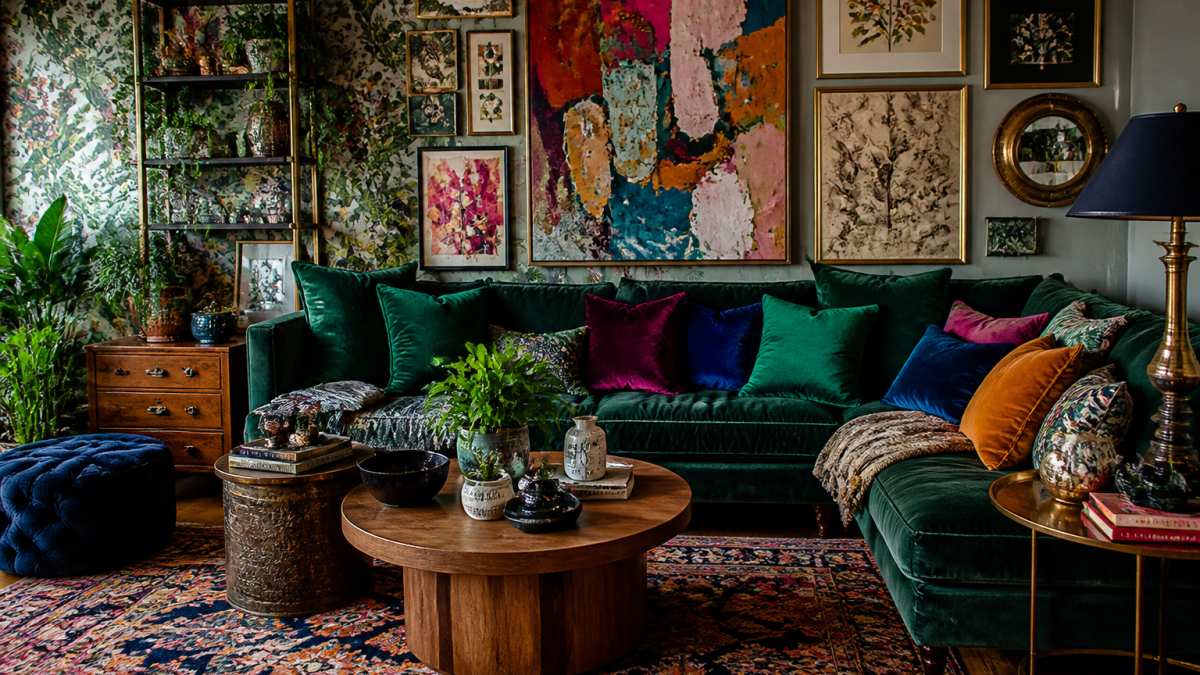
Furniture doesn't need to match: combine different wood tones, upholstery styles, and silhouettes for an eclectic, intentional feel. Accent pillows are essential, theJoyincolor's Mothers Day Accent Pillow ($17.13) brings layered color and pattern to any sofa.

Walls become gallery spaces: hang artwork at varying heights and add floating shelves to display collections, books, ceramics, and plants. Every surface tells your story.
Minimalist Living Room Ideas: Intentional Simplicity
The minimalist living room prioritizes calm through restraint. Choose a neutral palette, whites, grays, beiges, and stick to it. Furniture is functional with clean lines; a single statement sofa anchors the room.
Decoration is sparse but deliberate: one or two artwork pieces, a few objects with breathing room, plants for life. The space feels open and restful, especially valuable in smaller homes or shared spaces.
Minimalism isn't cold: texture matters, linen, wool, natural wood, adding warmth while maintaining the clean aesthetic.
Color Palettes: Bold Maximalism vs Neutral Minimalism
| Approach | Color Strategy | Effect | Best For |
|---|---|---|---|
| Maximalism | Bold, vibrant, mixed hues (jewel tones, saturated colors) | High visual energy, personal expression | Energetic personalities, creative spaces |
| Minimalism | Neutral or monochrome (whites, grays, blacks, soft earth tones) | Calm, clarity, focus | Restful environments, small spaces |
Maximalist palettes embrace saturation and contrast: deep blues with warm oranges, emerald walls with gold accents. This energizes people who draw vitality from their environment.
Minimalist palettes favor restraint: neutrals dominate with occasional strategic accent colors. This creates visual calm, makes spaces feel larger, and provides a stable backdrop for seasonal shifts.
Neither palette is objectively better. Maximalism energizes; minimalism soothes. The right choice depends on whether you want your home to stimulate or settle you.
How to Mix Maximalist and Minimalist Decor
Many people find that a pure approach doesn't fit their life. A hybrid approach blends the calm of minimalism with the personality of maximalism, using concrete rules to prevent confusion or clutter.
The Foundation-Plus-Accents Framework
Start with a minimalist foundation and layer maximalist elements strategically, giving your eye a place to rest while expressing personality.
Step 1: Establish a neutral base. Paint walls in soft neutrals and choose simplified furniture with clean lines. Keep large surfaces calm and uncluttered to create visual breathing room.
Step 2: Choose one or two focal points per room. Concentrate maximalist elements in specific zones: one accent wall, one gallery wall, one curated shelf, or one patterned rug.
Step 3: Use the 70-20-10 color rule. Allocate 70% to neutrals, 20% to a secondary color or pattern, and 10% to bold accents.
Practical Mixing Strategies
Textiles as your maximalist layer. Pillows, throws, rugs, and curtains offer affordable, changeable ways to add pattern and color.
Collections with breathing room. Display meaningful objects with intentional gaps rather than crowding shelves.
Patterned accents in limited zones. Concentrate patterns in one area: a patterned accent wall with solid furniture, or patterned pillows on a solid sofa.
Art as a maximalist statement. A gallery wall expresses personality while keeping the rest of the room calm.
One bold furniture piece. Choose one statement piece in a bold color or unique silhouette and build neutral pieces around it. This adds personality without visual complexity.
Hybrid Approaches for Shared Spaces
When you share a home with someone whose aesthetic differs from yours, hybrid design prevents conflict and respects both preferences.
Zone by room. Designate spaces for each person's style. One person gets a maximalist bedroom; the other gets a minimalist bedroom. The shared living room becomes hybrid, neutral base with intentional pops of both personalities.
Agree on common areas. In shared living rooms, kitchens, or entryways, establish a shared aesthetic. Often, a hybrid or minimalist approach works better because it doesn't overwhelm either person.
Use removable elements for flexibility. In rentals or shared spaces, rely on peel-and-stick wallpaper, hanging artwork with damage-free strips, removable shelving, and portable textiles.
Avoiding Common Hybrid Mistakes
Don't layer patterns randomly. Mixing patterns requires intention. Pair geometric prints with florals, or stripes with solids, but do it deliberately in one zone rather than scattering pattern throughout.
Don't skip the neutral base. Hybrid spaces fail when they lack a calm foundation.
Don't add without editing. Hybrid design requires ongoing curation. When you add a new object or textile, remove something else. This prevents gradual drift toward pure maximalism and clutter.
Don't ignore personal preference. If you're naturally drawn to calm, don't force maximalist elements just because you think they're trendy.
Testing Your Hybrid Style
Start small. Add one patterned pillow to a neutral sofa. Hang one piece of artwork. Paint one accent wall. Live with each change for two weeks before adding more. This lets you gauge whether the maximalist elements energize you or overwhelm you, and it prevents expensive mistakes. Hybrid design is iterative; you're finding the balance that actually works for your life, not copying a magazine spread.
Practical Considerations: Budget, Maintenance, and Small Spaces
Choosing between maximalist and minimalist design has real financial and time implications that go beyond aesthetics. Understanding these trade-offs helps you commit to a style that fits your actual life, not just your aspirations.
Budget and Cost Patterns
Maximalist spaces require higher upfront investment but reward gradual building. Start with a neutral base and add patterned pillows, thrifted art, and collected objects over time.
Minimalist spaces carry a hidden cost: quality matters more when quantity is low (What Is Quiet Luxury Interior Design? Guide). A single sofa must be durable and beautiful. Simplified furniture costs more per piece, but you buy fewer items overall.
Hybrid approaches offer middle ground. You invest in a neutral, quality foundation (sofa, flooring, walls) and add maximalist elements selectively through affordable textiles and accessories. This spreads costs over time and reduces the risk of expensive mistakes.
Maintenance and Time Investment
Maximalist spaces demand regular maintenance to stay intentional. Dusting layered objects, organizing shelves, and rotating items takes time. The line between "curated abundance" and "cluttered mess" requires active management. Plan for weekly tidying and monthly editing.
Minimalist spaces require less physical upkeep but demand discipline. You must resist adding items; one misplaced object disrupts the calm. Minimalism works well for busy people but requires strong boundaries against accumulation.
Hybrid approaches split the difference. You maintain a minimalist baseline (clear surfaces, edited collections) but allow maximalist zones (one patterned accent wall, a curated shelf, colorful textiles in one room). This reduces maintenance compared to full maximalism while preserving personality.
Small Spaces and Rentals
In small apartments or shared rentals, visual restraint serves you better. Maximalist layering can make spaces feel cramped; minimalism or hybrid approaches work better because open space makes rooms feel larger.
For renters, minimalism requires minimal wall damage and no permanent changes. Maximalism works if you use removable elements: peel-and-stick wallpaper, damage-free strips, and movable furniture.
Shared spaces benefit from hybrid zoning: one person's maximalist bedroom, a minimalist shared living room. This prevents aesthetic conflict and respects different sensory needs.
Sensory and Wellness Considerations
Consider how each style affects your wellbeing. Maximalist spaces energize people who thrive on color and pattern but can overwhelm those with sensory sensitivities or anxiety. If visual complexity causes stress, minimalism or hybrid approaches support better mental health.
Minimalist spaces promote calm and reduce decision fatigue. However, some people find minimalism cold or isolating; they need color and personality to feel at home.
Your choice should align with your sensory needs, not just design trends. If unsure, start with a hybrid approach: a calm foundation with intentional pops of color or pattern.
Which Style Is Right for Your Home
Your choice depends on three factors: personality, lifestyle, and space constraints.
Choose maximalism if: You draw energy from visual richness and personal expression. You love color, pattern, and collecting meaningful objects.
Choose minimalism if: You find visual complexity stressful. You value calm, focus, and open space. You prefer functional, low-maintenance environments.
Choose a hybrid approach if: You want personality without chaos. You're navigating shared spaces with different aesthetic preferences.
According to RentCafe's 2022 survey on design preferences, respondents preferred minimalism over maximalism, despite interior design experts predicting maximalism would dominate.
Your home should reflect who you are. TheJoyincolor's curated selection, from the Boho Accent Pillow ($17.13) to the All the Loves Graffiti Love Placemat Set ($40.52), supports both approaches, adding personality for maximalists and intentional pops of color for minimalists.


Your home is a reflection of your values. Take time to understand whether you thrive in abundance or calm, then design accordingly.
Frequently Asked Questions
What is the difference between maximalist and minimalist home decor?
Maximalist design embraces the philosophy of 'more is more,' celebrating color, patterns, textures, and personal collections to create visually rich, expressive spaces. Minimalist design follows 'less is more,' prioritizing clean lines, open space, and intentional selections to reduce visual clutter. A 2022 survey found that consumers actually preferred minimalism despite design experts predicting maximalism would dominate that year, showing both styles have strong appeal depending on personal preference and lifestyle.
Can you mix maximalist and minimalist styles in one home?
Yes, many people successfully blend both approaches by creating maximalist focal points in one room while keeping others minimalist, or layering bold accents into neutral spaces. The key is intentionality: choose which rooms or zones will showcase personality and color, then apply restraint elsewhere. This hybrid approach works especially well in shared homes or when partners have different design preferences, allowing each style to breathe without overwhelming the entire space.
Is maximalist or minimalist decor better for a small room?
Minimalist design typically works better in small spaces because open areas and fewer objects create a sense of spaciousness. However, you can use maximalist principles in small rooms if you edit carefully: choose a few bold statement pieces, use vertical space for art and shelving, and keep surfaces organized. Strategic accent pillows like the Mothers Day Accent Pillow ($17.13) can add maximalist flair without overwhelming a compact area.
What colors work best in maximalist versus minimalist design?
Maximalist color palettes embrace bold, vibrant, and saturated hues, think jewel tones, bright primaries, and clashing combinations that create visual excitement. Minimalist palettes favor neutral or monochrome schemes: whites, grays, blacks, and soft earth tones that provide calm and clarity. Both approaches work; the choice depends on whether you want your space to energize and express personality or provide visual rest and focus.
How do I know which style suits me?
Consider your personality and daily life: if you love color, personal stories, and sensory richness, maximalism likely appeals to you. If you prefer calm, order, and intentional spaces, minimalism may be your fit. You can also test-drive each style by rearranging one room or adding accent pieces. Many people find a middle ground works best, using maximalist elements in spaces where you want energy and minimalist principles where you need peace.
Finding the right balance between visual richness and restful simplicity is one of the most important decisions in home design. Whether you lean maximalist, minimalist, or somewhere in between, theJoyincolor has products designed to support your vision. Our machine-washable accent pillows and curated home goods bring quality and aesthetic appeal to any style. Start with pieces that feel authentically you, then build from there.