

Table of Contents
- Why Shoppers Look for a Petal and Palm Alternative
- Best Faux Palm Stems for Interior Design
- Tips for Choosing Quality Faux Plants
- Aesthetic Home Decor Brands and What to Compare
- Petal and Palm Alternative Pieces That Last
- Allergy-Friendly and Low-Maintenance Decor Options
- Conclusion
- Frequently Asked Questions
Last Updated: September 12, 2026
Why Shoppers Look for a Petal and Palm Alternative
Shoppers searching for a Petal and Palm alternative for decor want the same architectural, tropical look without the premium price tag or maintenance schedule. Here is what matters when you swap sources.
The timing makes sense. Industry trend reporting from Nearly Natural's 2026 faux plant forecast identifies tropical faux plants, palms especially, as a defining decor element for 2026, chosen to soften the straight lines and hard surfaces common in modern interiors. That demand pushed a wave of lookalike products onto the market, and quality varies wildly.
The look is easy to copy; the construction is not. A cheap stem that photographs well can sag, shed, or fade within a season. Below: which palm varieties read as real, how to judge fabric quality, and which pieces last.
Best Faux Palm Stems for Interior Design
The best faux palm stems for interior design are areca, kentia, cycas, and raphis, because each carries a distinct frond structure that reads as real at close range. Areca offers fine, feathery fronds for height; kentia gives a wider, arching spread; cycas brings stiff, glossy leaflets for a modern architectural look; raphis delivers the fan-shaped silhouette most people picture.
Scale decides whether a stem looks convincing. A floor vase needs 150 cm to 180 cm of stem height; a tabletop arrangement works better at 40 cm to 60 cm. Match the stem to the container before you buy.
Palm Varieties That Read as Real
Frond density separates convincing stems from obvious ones. A real areca frond carries dozens of narrow leaflets along a central rib; budget versions cut that count in half, which is why they look sparse from two meters away.
Color variation matters just as much. Natural palms shift from deep green at the base to lighter, slightly yellowed tips. Single-tone green stems are the fastest giveaway.
Styling Stems Without a Vase Full of Petals
Loose petals are a styling trap. Guidance from Behind the Bloom's floral technique series notes that scattered petals often look stiff or heavy in arrangements, and recommends working with pressure and texture instead of outlines alone. For event work, that problem compounds: many venues restrict fresh petals outright because wet petals on hard flooring create a slip hazard, which is why planners increasingly reach for silk petals, dried flowers, or bubbles.
The practical alternative is texture contrast: pair one tall palm stem with a small cluster of dried eucalyptus, then add two or three bud vases holding single stems. The impact comes from height difference, not volume.
Tips for Choosing Quality Faux Plants
Quality in a faux plant comes down to fiber type, stem armature, and color layering. Run all three before committing to a full set.
- Fiber type. Silk petals and leaves drape and catch light the way real foliage does. Polyester blends resist fading but can look flat under direct sun.
- Stem armature. Bend the stem. A wire core holds the shape you set; a plastic core springs back and eventually cracks.
- Color layering. Look for at least two green tones on a single leaf, plus a slightly darker rib.
- Attachment points. Tug one leaflet gently. Glued leaflets fall off within months; molded or wrapped ones stay put.
- Base weight. A weighted base keeps a tall stem upright without leaning against a wall.
Aesthetic Home Decor Brands and What to Compare
Comparing aesthetic home decor brands for a tropical, architectural look comes down to four things most product pages bury: material sourcing, colorfastness testing, replacement-part availability, and whether the brand sells stems and petals as a coordinated system or as one-off SKUs. Two brands can sell a visually identical areca stem; the difference shows up eighteen months later when one has faded and the other still reads as foliage.
Start with the specification sheet, not the styled photo. A brand that publishes fiber content, leaflet count per frond, stem length, and base weight expects the piece to be inspected; one that publishes only a lifestyle image and a color name does not.
The Four Brand-Level Checks
- Material sourcing transparency. Brands that name their fiber (real silk, silk-polyester blend, or 100% polyester) are easier to predict than brands that say "premium fabric." Silk drapes like real foliage but fades faster in direct sun; polyester holds color longer but can look flat in bright rooms. The right pick depends on where the piece sits.
- Colorfastness testing. Ask whether the brand tests for UV fade. Printed polyester often shifts color within one summer near a west-facing window, while solution-dyed or layered-tone fabrics hold up two to three seasons.
- Replacement-part availability. Stems break, bases crack, and pillow inserts flatten. A brand that sells replacement inserts, extra stems, or individual fronds separately lets you extend a set's life instead of replacing the whole arrangement.
- System vs. one-off. Brands that design stems, vases, and textiles to work together make styling easier because proportions and palette already match. Brands that sell isolated pieces leave you to solve scale and tone yourself.
What the Price Actually Buys You
Higher prices usually buy three things: heavier fabric, better colorfastness, and a construction detail you cannot see in a photo, such as a hidden zipper, lined backing, or weighted stem base. Those details drive longevity and real cost per year of use.
| What to Check | Lower-Cost Signal | Higher-Quality Signal |
|---|---|---|
| Fabric weight | Under 200 g/m² | 220-250 g/m² or higher |
| Cover care | Spot clean only | Machine-washable case |
| Closure | Open end or visible seam | Hidden zipper |
| Insert | Not included | Shape-retaining insert included |
| Colorfastness | Single-tone print | Layered, multi-tone print |
| Stem base | Unweighted, tips over | Weighted base, stands upright |
That last row matters more than shoppers expect for tall palm stems. An unweighted stem in a floor vase leans against a wall within a week, defeating the architectural silhouette; a weighted base keeps it vertical without propping.
Matching Brand to Room
A brand optimized for event styling (cheap, high-volume, disposable) differs from one optimized for permanent interior decor (heavier materials, tested colorfastness, replacement parts). Most shoppers searching for a Petal and Palm alternative are in the second category without realizing it, they want the look to last, not just photograph well for one season. Read the care instructions before the marketing copy.
Petal and Palm Alternative Pieces That Last
Durability is where a considered Petal and Palm alternative for decor earns its place. Longevity comes from three factors, material weight, care routine, and whether the piece was designed for actual handling.
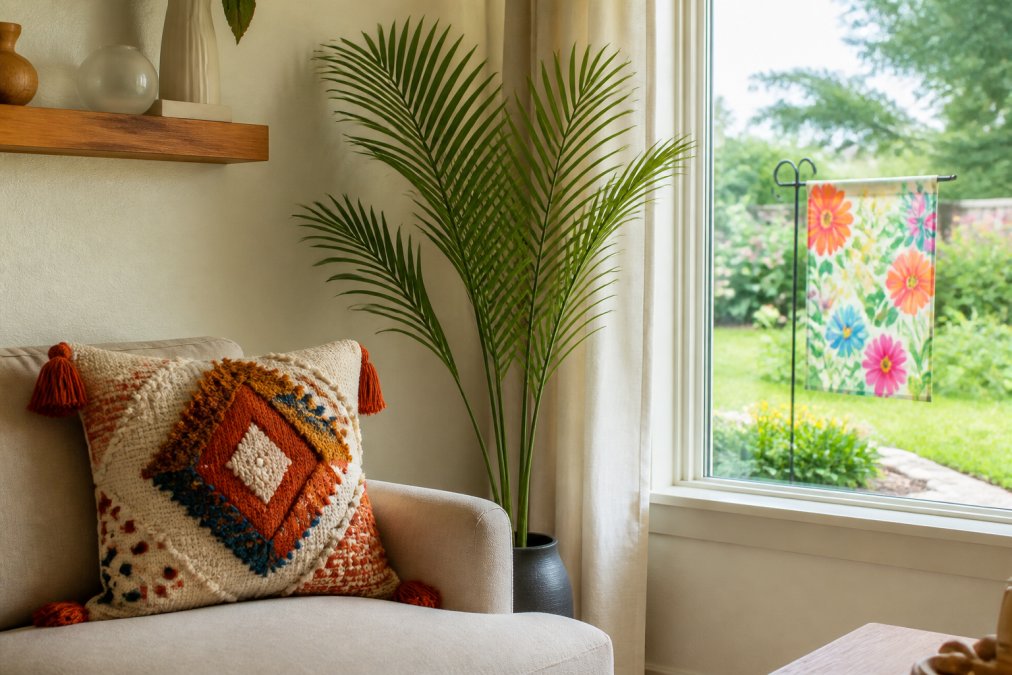
The Boho Accent Pillow at $17.13 uses a 100% polyester case and insert at 220-250 g/m², includes a hidden zipper, and the case is machine-washable. This combination contributes to its longevity.

For outdoor-facing decor, the BOHO Garden flag at $12.54 is built from 100% polyester at 34 g/m² with a pole hem, sized 30 × 43 cm. Note that the pole is not included, and each flag may vary slightly in size.

Keeping Greenery and Fabric Looking New
Fabric decor lasts longer with a simple routine than with any protective spray. Dust faux greenery with a dry microfiber cloth every two to three weeks; trapped dust is what makes artificial plants look artificial. Keep stems out of direct afternoon sun, since UV causes color shift in printed polyester.
For textiles, follow the manufacturer's wash instructions exactly. The Salt Marsh Hand towel at $13.63 specifies machine washing in cold water (max. 9).
Allergy-Friendly and Low-Maintenance Decor Options
Allergy-friendly decor means choosing materials that do not release pollen, harbor mold, or require the moisture fresh arrangements need, but artificial is not automatically safe. This is where a Petal and Palm alternative can outperform fresh florals for a household with sensitivities.
What Actually Triggers Reactions
Four mechanisms drive most decor-related allergy complaints:
- Pollen. Fresh flowers and fresh palm fronds release pollen directly. Faux and preserved materials eliminate this trigger completely, the primary reason allergy-conscious shoppers switch.
- Mold and mildew. Standing water, damp floral foam, and humid preserved stems all support mold growth. Faux greenery that never touches water removes the moisture source, but preserved stems can absorb ambient humidity and should stay out of bathrooms and kitchens.
- Dust mites and dust accumulation. Any textured surface collects dust, and dust mites feed on it. Dense, fine leaflets (areca, kentia) trap more dust than smooth, wide-leaf varieties (cycas, raphis) (the EPA). If dust is your trigger, choose wider leaflets and dust more often.
- Volatile organic compounds (VOCs). Some low-cost faux plants and printed textiles off-gas a plastic or chemical odor when new. This typically fades within a few days in a ventilated room, but shoppers with chemical sensitivities should air out new pieces before placing them in a bedroom.
Hypoallergenic Material Ranking
Not all faux and preserved materials are equal for sensitive households. From lowest to highest trigger risk:
- Smooth-leaf faux palms (cycas, raphis). Fewest dust-catching surfaces, no water, no pollen. Best choice for allergy-first rooms.
- Silk or polyester petals used flat. Low dust surface area, no pollen, no moisture. Good for tabletop and event use.
- Dried arrangements (eucalyptus, pampas, dried grasses). No pollen, but brittle material sheds fine particles over time and can irritate airways if handled roughly.
- Preserved stems (glycerin-treated). No pollen, but humidity-sensitive and can support mold in damp rooms.
- Fresh flowers and fresh palm fronds. Highest trigger load, pollen plus standing water plus mold risk.
Maintenance Load by Material
- Faux greenery: dust every two to three weeks with a dry microfiber cloth; no water, no direct UV. Dense-leaflet varieties need more frequent dusting than smooth-leaf varieties.
- Preserved stems: keep away from humidity; never dust with liquid products, which can rehydrate and degrade the preservation treatment.
- Dried arrangements: handle minimally, since dried material becomes brittle over time and sheds particles when disturbed.
- Fabric decor: follow wash labels; most printed polyester covers handle cold machine cycles well, and washing removes accumulated dust mites rather than just redistributing them.
The Unique Angle: Allergy-First Styling
Most decor guides treat allergy-friendliness as a footnote. For a household with sensitivities, it should be the starting constraint. Build the arrangement from smooth-leaf faux palms first, add flat silk petals for color, and skip preserved and dried materials in bedrooms and nurseries. That combination delivers the tropical, architectural look with the lowest trigger load, something no fresh-flower arrangement can match.
Conclusion
Building a tropical, architectural look without the maintenance overhead is doable if you check fiber, fabric weight, and care instructions before you buy rather than after.
theJoyincolor builds decor around exactly that trade-off: pieces designed to be used daily, not just styled for a photo. The Boho Accent Pillow pairs a machine-washable cover with a shape-retaining insert, the BOHO Garden flag uses durable 100% polyester for outdoor exposure, and the Boho Flowers mug is dishwasher and microwave safe at $10.50.

Get started with theJoyincolor and build a space that holds up to everyday life, not just the first photograph.
Frequently Asked Questions
What can I decorate with instead of fresh flowers and palm fronds?
Faux palm stems, dried palm leaves, and silk petals give you the same shape and texture without wilting or leaving slippery debris on floors. Venues often prohibit loose fresh petals because they create slipping hazards, which is why many hosts switch to freeze-dried petals, silk options, or bubbles. Pair a single areca or kentia stem with a textured throw pillow or a garden flag to build a botanical aesthetic that holds up for months, not days.
Are fake flowers and palm stems tacky, or can they look stylish?
They look stylish when the material and scale are right. Tropical faux plants, especially palms and deep-leaf varieties, are trending for 2026 to balance straight lines and hard surfaces in modern interiors, according to Nearly Natural. Look for realistic stem height, visible texture contrast, and a matte finish. Cheap shiny plastic reads as fake; a well-shaped faux palm in a simple vessel reads as intentional design.
How do I choose high-quality faux plants that will not fall apart?
Check three things: fabric weight, construction, and return policy. Heavier materials hold shape longer, so compare the listed weight rather than the photo. Look for secure joins at the stem and a finish that will not flake. Then confirm the return window before ordering, since online decor sometimes looks different in person.
Are faux botanical alternatives worth the cost compared with cheaper decor?
Compare cost per year of use, not cost per item. A $17.13 machine-washable accent pillow or a $12.54 polyester garden flag can be used season after season, while fresh arrangements get replaced every event. Recycled palm waste is also being turned into decorative elements, so sustainable alternatives now include materials that would otherwise be discarded. If a piece survives a year of normal use, the higher upfront price usually wins.
How do I keep faux greenery and fabric decor looking new?
Dust faux stems every few weeks with a dry cloth or a cool hairdryer on low, and keep them out of direct sun to slow fading. Fabric pieces need different care: the Salt Marsh hand towel should be washed in cold water at a maximum of 90°F (30°C). A machine-washable pillow cover can go straight in the wash, which keeps a colorful room looking sharp.