

Table of Contents
- Why Joy Matters More Than Perfection in Home Design
- Modern Aesthetic Home Decor for Beginners: Start with Color
- Strategic Lighting: The Overlooked Game-Changer
- DIY Home Decor Ideas on a Budget That Actually Work
- Affordable Ways to Add Color to Home Decor
- Scale, Proportion, and the Power of Large-Scale Wall Art
- Decluttering: The Foundation of a Joyful Space
- Rental-Friendly Design Hacks for Temporary Spaces
- Frequently Asked Questions
Last Updated: September 4, 2026
Designing a joyful home on a budget isn't about copying a magazine spread. It's about creating a space that feels personal, calming, and built to last. Houzz reports that 2026 design trends have shifted away from resale-focused upgrades and toward warmth, longevity, and personal well-being Houzz 2026 Home Design Trends. At theJoyincolor, we believe a joyful home on a budget starts with intention, not expense. Below, we'll show you exactly how to prioritize what matters, skip the costly mistakes, and build a space that genuinely reflects you.
Why Joy Matters More Than Perfection in Home Design
Most guides get this backwards. They obsess over making a home "look expensive," which leads to what some experts call the "Faberge Egg" trap: spending on small, ornate objects while ignoring the large surfaces that actually define a room Aesthetics of Joy commentary. This approach misses the point entirely.
The real goal is a space that feels good to live in. Think about how a room makes you feel when you walk in, not how it photographs. A joyful home on a budget prioritizes sensory experience: the warmth of natural light, the comfort of a soft chair, the visual interest of a color you love.
Modern Aesthetic Home Decor for Beginners: Start with Color
For those new to modern aesthetic home decor for beginners, color is the most forgiving and affordable starting point. Paint transforms a room faster than any other change, and current trends favor earthy tones and natural materials that don't require professional contractors to apply Quartz 2026 Home Design Trends.
A common mistake is playing it safe with beige and gray. Recent design guidance identifies "playing it safe" as a primary factor that makes a home look cheap Yahoo Shopping design guidance. Instead, commit to a color palette that speaks to you. One bold accent wall, a painted ceiling, or even a colorful front door can shift the entire personality of your space.
Strategic Lighting: The Overlooked Game-Changer
Bad lighting is the silent killer of a joyful home. You can have beautiful furniture and perfect paint, but harsh overhead light will flatten everything and drain mood. Research in environmental psychology shows that light quality directly impacts circadian rhythm, alertness, and emotional well-being, making strategic lighting one of the highest-ROI investments you can make on a budget Environmental Psychology and Lighting.
The fix is layering light sources across three categories:
Ambient lighting provides overall illumination without glare. Replace a single overhead fixture with multiple smaller sources: a ceiling fixture on a dimmer, wall sconces, or recessed lights. If you rent or can't rewire, plug-in pendant lights and floor lamps work just as well. Look for bulbs rated 2700K to 3000K (warm white), which promotes relaxation and comfort. Avoid 5000K+ (cool white), which mimics office fluorescents and triggers alertness, the opposite of joy.
Task lighting targets specific activities: reading, cooking, or working. A desk lamp, under-cabinet strip lights (battery-powered for renters), or a clip-on lamp costs $15-$40 and prevents eye strain. Position task lighting to your side or behind you to avoid casting shadows on your work surface.
Accent lighting highlights what you love: a favorite painting, a plant, or architectural detail. A small directional lamp, string lights, or even a candle creates visual interest and draws the eye to meaningful objects rather than clutter. This is where thrift stores excel, a vintage brass lamp base with a new shade and LED bulb ($8-$15) becomes a statement piece for under $30.
The layering principle is critical: never rely on a single overhead light. A room with three light sources at different brightness levels feels larger, warmer, and more intentional than one bright fixture. Dimmers are essential, they cost $15-$25 to install and let you adjust mood throughout the day. For renters, smart bulbs (around $10-$15 each) offer dimming without rewiring.
DIY Home Decor Ideas on a Budget That Actually Work
The most effective DIY home decor ideas on a budget are those that change the largest surfaces first, not because they're cheap, but because they directly impact how you feel in a space. Neuroscience research shows that our brains process large visual fields (walls, floors, ceilings) before small details, meaning a room's overall mood is set by its biggest surfaces, not its accessories Visual Perception and Interior Space.
Before you buy a single decorative object, audit your room's largest surfaces:
Walls: A fresh coat of paint is the single highest-ROI DIY project. Choose a color that genuinely excites you, not one that "matches everything." Warm terracottas, sage greens, and soft blues have been shown to reduce stress and increase contentment in living spaces. One accent wall costs $40-$70 and takes a weekend; the emotional lift lasts years. For renters, peel-and-stick wallpaper ($20-$40 per roll) covers 25-50 square feet and peels cleanly without damage.
Floors: An area rug that anchors your seating area (at least 5×7 feet for living rooms, 3×5 feet for bedrooms) grounds a space and defines zones. A properly scaled rug makes a room feel intentional and cohesive. Thrift stores often have quality wool rugs for $30-$80; a professional cleaning ($50-$100) restores them to like-new condition. Undersized rugs create visual fragmentation and make a room feel chaotic, one large rug beats three small ones every time.
Windows: Floor-length curtains (even in a rental, using tension rods) soften hard lines and add height. Curtains also control light and temperature, reducing energy costs. A basic rod ($15-$25) and fabric ($30-$60 for two panels) transform a bare window into a focal point. Avoid short cafe curtains, which visually shrink a room.
Architectural details: If you own, adding simple crown molding or baseboards ($100-$300 in materials and tools) creates a finished, custom look. For renters, peel-and-stick molding trim ($15-$30 per 10-foot roll) mimics the effect without permanent installation.
Thrifting and Upcycling for Personality
Thrift store finds add personality that no catalog can replicate, and they carry emotional weight. A vintage dresser you sand and repaint becomes a story, not just furniture. This practice also aligns with sustainable budget design, keeping usable items out of landfills while saving you money.
When thrifting, look for solid wood furniture with good bones: dressers, side tables, chairs, and shelving. Avoid particle board (it won't sand or paint well). A $20 dresser + $15 in paint + 4 hours of work becomes a $200+ statement piece. The joy comes from both the cost savings and the creative ownership.
Hardware Swaps and Small-Scale Updates
The hardware swap is the highest-ROI micro-project in home design. Replacing dated cabinet knobs, drawer pulls, and switch plates costs less than $50 for an entire kitchen or bathroom and takes 2-3 hours. This small update modernizes a room instantly, creating a cohesive, intentional look without a renovation.
Choose hardware finishes that match your color palette: brushed gold for warm rooms, matte black for modern spaces, or antique brass for eclectic styles. Consistency in hardware creates visual rhythm, which the brain reads as "well-designed" even if everything else is thrifted or DIY.
Affordable Ways to Add Color to Home Decor
If painting feels permanent, soft furnishings offer affordable ways to add color to home decor. Accent pillows, throws, hand towels, and curtains inject color and pattern without commitment. They are also machine-washable, making them practical for everyday life.
TheJoyincolor offers pieces designed for exactly this purpose. The Mothers Day Accent Pillow features a 100% polyester case with a hidden zipper and a shape-retaining insert, so it stays comfortable and vibrant through daily use. The Salt Marsh Hand Towel adds a stylish, absorbent touch to a bathroom with a soft polyester front and cozy cotton back. These accent pieces let you test a color palette before committing to larger investments.

Scale, Proportion, and the Power of Large-Scale Wall Art
A common mistake in budget decorating is buying art that is too small. Small frames scattered across a large wall create visual noise, not visual interest. One large-scale piece of art, or a gallery wall arranged as a single unit, anchors a room and provides a focal point.
The same principle applies to rugs. An undersized rug makes a room feel disjointed. Measure your space and buy the largest rug your budget allows, even if it means skipping other purchases. Scale and proportion are interior design principles that cost nothing to apply but transform how a space feels.
Decluttering: The Foundation of a Joyful Space
Before you spend a dollar on decor, declutter. Designers and homeowners in 2026 are prioritizing joyful, clutter-free living spaces Houzz Magazine 2026 Design Trends. Clutter adds visual weight and mental stress, working against every other effort you make. A joyful home on a budget is impossible in a room crammed with items you don't use or love.
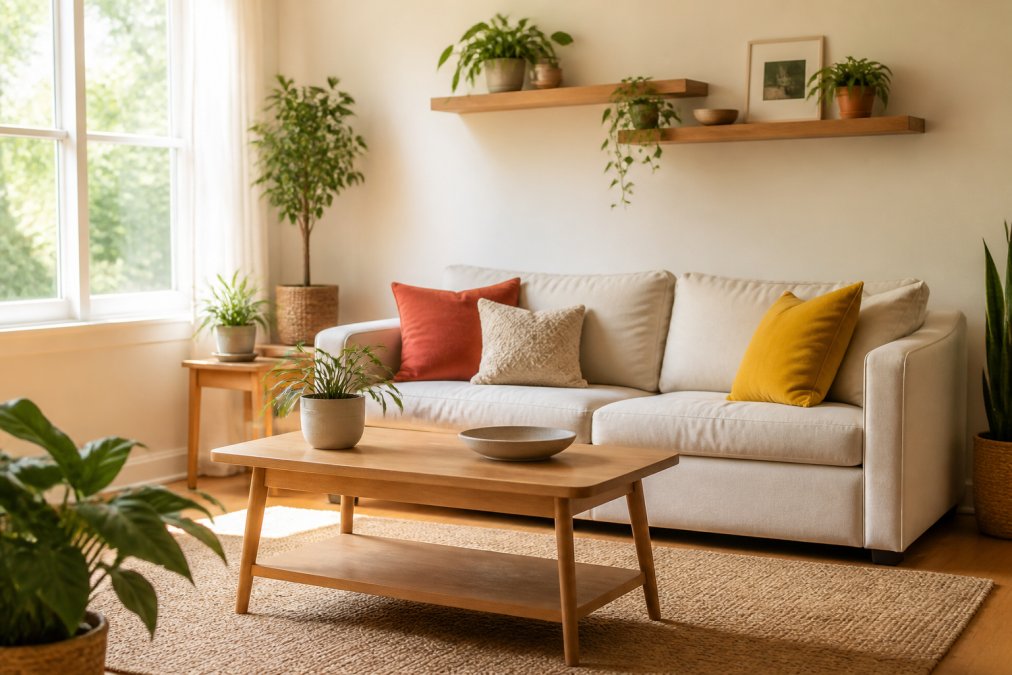
Keep surfaces clear, donate what you don't need, and store the rest out of sight. This frees up your budget to invest in fewer, better pieces that truly matter. Dena of Fletcher Creek Cottage proved the power of this approach, self-building a home for a total cost of $70,000 by focusing on essentials and managing every expense carefully Simple Farmhouse Life Podcast.
Rental-Friendly Design Hacks for Temporary Spaces
Renters face a unique challenge: how to make a space feel personal without permanent changes. The solution is to focus on removable layers. Peel-and-stick wallpaper adds pattern to a single wall and removes cleanly. Command hooks and tension rods let you hang art and curtains without drilling. Large floor rugs cover undesirable carpet or flooring.
These rental-friendly design hacks also align with the "Joyspanning" trend, where designers prioritize styling techniques that increase home joy without large-scale renovations Ideal Home Joyspanning Trend. Accent pillows and throws can be packed up and moved with you, making them smart investments for renters who want a joyful home on a budget that travels well.
| Budget Strategy | Approximate Cost | Time Commitment | Best For |
|---|---|---|---|
| Decluttering & organizing | $0 | 1 weekend | Everyone starting fresh |
| Paint an accent wall | $40-$70 | 1 day | Homeowners and long-term renters |
| Hardware swap | $30-$50 | 2 hours | Kitchens and bathrooms |
| Thrifted lamp + new shade | $25-$40 | 1 hour | Adding lighting layers |
| Accent pillows & throws | $15-$25 each | Instant | Renters testing color palettes |
From paint to pillows to lighting, a joyful home on a budget is built through deliberate choices, not big spending. Start with the largest surfaces, add color through soft furnishings, and let your personality drive the design. At theJoyincolor, we curate vibrant, quality pieces like the Boho Accent Pillow and the Joy Garden flag to help you bring color and life into your daily routine. Get started with theJoyincolor and transform your space into a place you genuinely love.


Frequently Asked Questions
How can I design a joyful home on a budget without sacrificing quality?
Focus on high-impact, low-cost changes: strategic lighting upgrades, bold paint colors in key areas, and carefully curated accent pieces. Prioritize items you interact with daily, like textiles and lighting, over expensive furniture. Thrifting and DIY projects stretch your budget further while adding personality that expensive, mass-produced items cannot match.
What are the best affordable ways to add color to home decor?
Paint is the most cost-effective tool for color transformation. Accent walls, painted trim, or even small furniture pieces create visual interest without breaking your budget. Soft furnishings like throw pillows ($17.13), hand towels ($13.63), and rugs layer color affordably and can be swapped seasonally. Thrift stores offer unique, colorful pieces at a fraction of retail prices. Strategic use of colored lighting also shifts how colors feel in your space without permanent changes.
Are budget-friendly decor pieces actually durable and practical for everyday use?
Quality matters more than price. Look for pieces with substance: natural materials, reinforced seams, and honest construction. theJoyincolor's accent pillows feature machine-washable cases and shape-retaining inserts designed for daily use. Thrifted vintage pieces often outlast newer budget alternatives because they were built to last. Invest in items you use frequently, bedding, lighting, seating, and be flexible with purely decorative elements that can change with trends.
What is the 3-5-7 rule in decorating, and how does it help with budget design?
The 3-5-7 rule guides visual interest: use 3 colors in your palette, 5 key pieces of furniture or focal points, and 7 decorative accessories per room. This framework prevents overspending on too many items while ensuring your space feels intentional and cohesive. It works especially well for budget design because it forces prioritization, you choose fewer, more meaningful pieces rather than filling space with clutter. This approach aligns with 2026 design trends emphasizing joyful, clutter-free living.
This article was written using GrandRanker