

Table of Contents
- Define Your Personal Design Style First
- Build a Cohesive Color Palette
- Modern Aesthetic Home Decor for Beginners
- How to Mix Decor Styles Without Clutter
- Master Layering, Scale, and Visual Weight
- Styling Shelves Like a Designer
- Edit and Declutter for Intentional Curation
- Rotate and Maintain Your Curated Space
Last Updated: August 27, 2026
Define Your Personal Design Style First
Your design style is the foundation for every curation decision you'll make. Without clarity on what resonates with you, you'll end up with a mismatched collection that feels borrowed rather than owned.
Audit what already exists in your space. Walk through each room and note which items you genuinely love versus those you keep out of obligation. According to interior design experts, your home should tell the story of who you are and be a collection of what you love. This principle separates a curated home from a decorated one.
Identify your aesthetic guardrails. Are you drawn to minimalism, maximalism, eclectic mixing, or something in between? Write down 3-5 adjectives describing the feeling you want your space to evoke: calm, vibrant, sophisticated, cozy, adventurous.
Look at images that stop you. Create a Pinterest board or save Instagram posts of rooms that resonate. Study the patterns in color, texture, and composition, these reveal your authentic style, not what you think you should like.
Build a Cohesive Color Palette
A cohesive color palette transforms individual pieces into a unified interior. Start with a dominant color for roughly 60% of your visual space (typically a neutral like white, gray, or beige). Choose a secondary color for 30% and accent colors for 10%. This 60-30-10 ratio creates visual harmony.
Your palette should extend from walls through textiles, artwork, and accessories. If your walls are soft gray, consider accent pillows in deep teal or terracotta that echo the palette without repeating it exactly.
Research shows that wall decor accounts for 45% of personalized home decor demand in 2026, driven by customized wall art and typography. Repeating colors across different mediums, a throw pillow, wall art, ceramic vase, creates visual threads that tie the room together.
Test your palette before committing. Gather paint swatches, fabric samples, and product images in your chosen colors. Live with them in your space for a few days under different lighting conditions.
Modern Aesthetic Home Decor for Beginners
Modern aesthetic home decor for beginners requires intentionality, not expensive pieces or design credentials. Start with clean lines, functional pieces, and negative space. Each piece should have a purpose and nothing should feel accidental.
Invest in one or two statement pieces that genuinely excite you, a piece of wall art, a sculptural chair, or a beautifully designed accent pillow like theJoyincolor's Boho Accent Pillow ($17.13). Statement pieces anchor a room and give you permission to build your palette around them.

Focus on quality over quantity. According to research from Houzz's 2026 Home Study, people are investing more strategically in fewer, higher-quality pieces rather than accumulating quantity (houzz.com). A modern aesthetic space with fewer, well-made items feels more curated than a crowded space filled with trend-driven purchases.
Embrace negative space. An empty corner with a single plant creates more visual impact than a corner packed with accessories.
How to Mix Decor Styles Without Clutter
Mixing decor styles is where curation becomes an art. Establish a dominant style, then layer in complementary secondary styles. For example, lead with modern minimalism but introduce vintage pieces that add warmth and character.
The key to mixing without clutter is proportion and intentionality. If 70% of your pieces are modern and minimal, you have room for 20-30% eclectic or vintage elements. Each mixed-in piece should feel like a deliberate choice that tells a story or fills a functional need.
Create visual connections between different styles through color and texture. If you're mixing mid-century modern furniture with bohemian textiles, tie them together through a shared color palette. A terracotta accent pillow in boho style can echo the warmth of a mid-century wood table.

Before adding a new item, ask: Does this speak the same visual language as what I already have, or does it create an intentional contrast? Avoid collecting styles; instead, ensure every piece has a reason for coexisting with the others.
Master Layering, Scale, and Visual Weight
Layering prevents a curated space from feeling flat or sterile. Start with your base layer, larger furniture pieces and wall color. Add mid-layer pieces: shelving, artwork, textiles. Finally, add surface-layer pieces: small objects, plants, decorative accessories.
Scale matters enormously. Match scale to the space: larger pieces in larger rooms, smaller pieces clustered together in smaller spaces. The real principle is proportion, does the piece feel appropriate for its context?
Visual weight is about how much visual attention a piece commands. A dark, textured object feels heavier than a light, smooth one. When you understand visual weight, you can balance a room intuitively. If one side of your living room has a dark, substantial sofa, balance it with artwork or a plant on the opposite side.
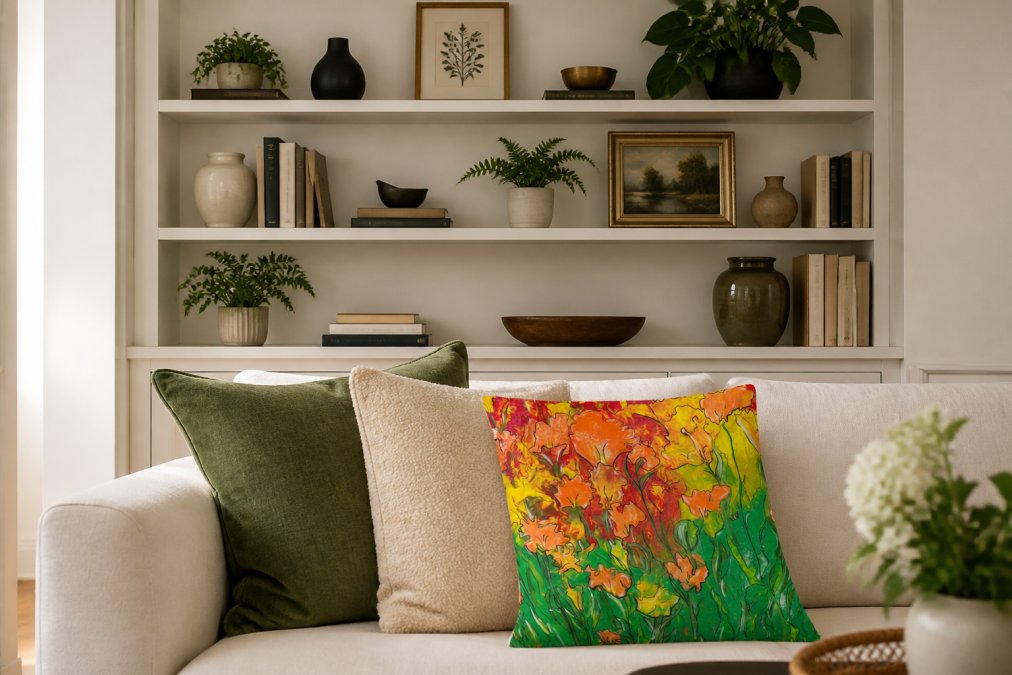
Vary heights by using pedestals, stacking books, or placing objects on different-sized surfaces. Vary visual weight by mixing heavy and light pieces, dark and light colors, smooth and textured materials. According to research, 86% of people who had art in every room were happier with their home's overall state than those with art in only a few rooms.
Styling Shelves Like a Designer
Shelves are where curation becomes visible. Follow this principle: vary height, texture, color, and function. Group objects in odd numbers (3 or 5 items work better than 2 or 4). Alternate between vertical and horizontal arrangements.
Include negative space, empty areas that let your eye rest. Aim for roughly 60% filled, 40% empty. This ratio allows each piece to be noticed while maintaining visual calm.
Mix functional and decorative pieces. A stack of beautiful books is both functional and decorative. A ceramic vase holds flowers and adds color. A small plant provides texture and life.
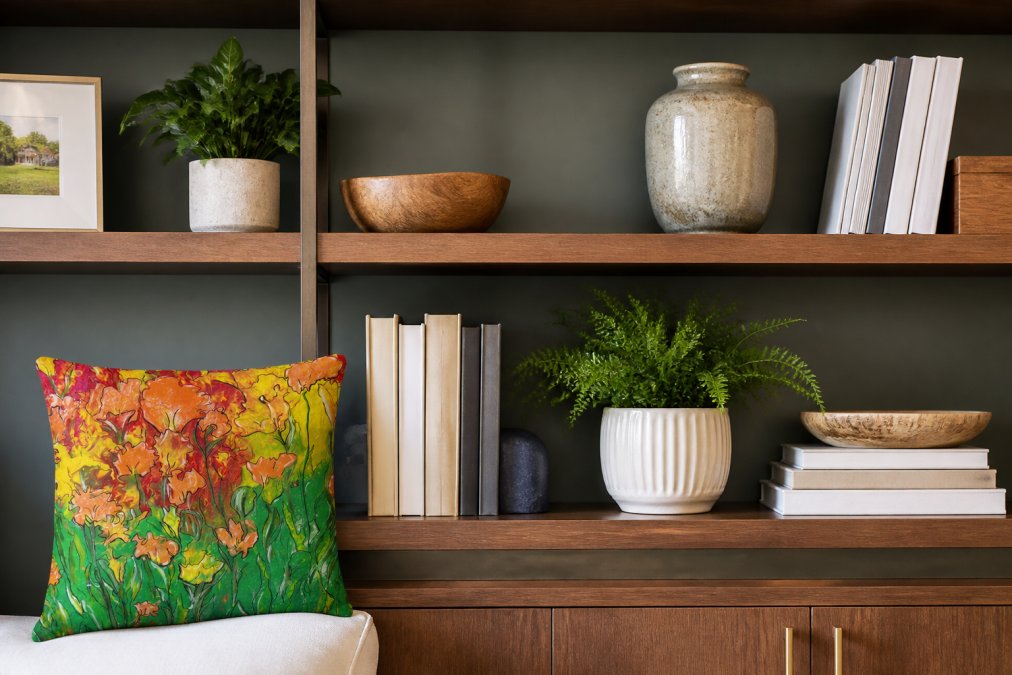
Create focal points by anchoring shelves with a larger piece, a framed photograph, sculpture, or substantial plant. Build around it with smaller pieces that support but don't compete. Use color and texture as tools: introduce one bold-colored piece if your shelf is mostly neutral, or add a textured element if everything is smooth.
theJoyincolor's Placemat Set ($40.52) demonstrates how intentional color and pattern can anchor a space, the same principle applies to shelf styling.
Edit and Declutter for Intentional Curation
Curation requires editing. You cannot have a curated space while holding onto everything. Start with one category: textiles, artwork, decorative objects, or books. Ask three questions about each piece: Do I love this? Does it serve my current design vision? Would I buy it again today? If the answer to any is no, it's a candidate for removal.
According to research, homeowners who completed intentional projects reported increased confidence and happiness (talkerresearch.com). Decluttering creates a similar effect.
Don't aim for minimalism unless that's your style. Curation is about having the right things, not the fewest things. A maximalist curated space is full of color and texture, but each piece is there intentionally.
Create a "maybe" box for uncertain items. Live with it for a month. If you don't miss anything, donate it.
Rotate and Maintain Your Curated Space
A curated space is maintained through intentional rotation and seasonal refresh. Every season, swap out 10-15% of your decorative pieces. This keeps your space feeling fresh without requiring new purchases.
Maintenance also means regular editing. Every few months, ask: Is this still serving my vision? Has my taste shifted? Remove what no longer resonates and make space for new discoveries.
Document your curated spaces. Take photos of shelf styling, room arrangements, and color combinations that work. These become references for future decisions and help you maintain consistency.
Curation is ongoing. It's not a project you complete; it's a way of approaching your space with intention. Each decision, edit, and rotation reinforces your personal aesthetic and deepens your connection to your home.
Creating a curated home is about making intentional choices that reflect who you are. The process requires defining your style, building a cohesive palette, understanding composition, and committing to regular editing. At theJoyincolor, we believe that every piece in your space should bring you joy and contribute to a larger vision. Explore our curated collection of vibrant, thoughtfully designed pieces that help you express your aesthetic, from accent pillows to coordinated home accessories. Start building your intentional space today with pieces that genuinely reflect your style and values.
| Strategy | Purpose | Frequency |
|---|---|---|
| Define personal style | Establish design guardrails | Once, then revisit annually |
| Build color palette | Create visual cohesion | Once, adjust as needed |
| Master layering & scale | Add dimension and interest | Ongoing during curation |
| Style with intention | Arrange pieces strategically | Monthly or seasonal refresh |
| Edit and declutter | Remove pieces that don't serve vision | Quarterly |
| Rotate seasonally | Keep space feeling fresh | Every 3-4 months |
=== FAQ ANSWERS (audit these too, same rules) ===
[1] Q: What is the 70/30 rule in decorating? A: The 70/30 rule means 70% of your decor should be neutral or cohesive base pieces, while 30% can be bold, trendy, or statement items. This balance prevents a curated home from feeling chaotic while still allowing personality to shine. The neutral foundation creates visual harmony, while the 30% adds intentionality and collected character that makes your space feel thoughtfully designed rather than randomly assembled.
[2] Q: How can I make my curated home decor look intentional on a budget? A: Focus on editing what you already own rather than buying more. Declutter ruthlessly, keeping only pieces that align with your chosen aesthetic and color palette. Mix affordable basics from retailers with one or two higher-quality statement pieces. Rearrange existing items seasonally to refresh the space without spending. Use accent pieces like pillows (like theJoyincolor's accent pillows at $17.13) strategically to tie rooms together and create visual cohesion across your home.

[3] Q: What makes a home look cheap versus curated? A: A cheap-looking home often has mismatched pieces with no visual connection, clutter without purpose, and poor proportions between furniture and decor. A curated home shows intentionality: pieces relate through color, scale, or material; negative space is respected; and every item serves both function and aesthetic. Curated spaces feel collected over time, not assembled all at once. Quality doesn't always mean expensive, it means choosing pieces that last and align with your design vision.
[4] Q: How do I know if my home decor actually looks cohesive? A: Step back and ask: Do the colors relate to each other? Can I trace a visual thread through rooms? Are proportions balanced? Do pieces feel intentional, not random? A cohesive curated home has a clear palette, consistent design principles applied across rooms, and pieces that feel like they belong together. If you can explain why each piece is there and how it connects to your overall aesthetic, your curation is working. Aim for harmony, not monotony, cohesion allows for personality.
Frequently Asked Questions
Q: What is the 70/30 rule in decorating?
A: The 70/30 rule means 70% of your decor should be neutral or cohesive base pieces, while 30% can be bold, trendy, or statement items. This balance prevents a curated home from feeling chaotic while still allowing personality to shine. The neutral foundation creates visual harmony, while the 30% adds intentionality and collected character that makes your space feel thoughtfully designed rather than randomly assembled.
Q: How can I make my curated home decor look intentional on a budget?
A: Focus on editing what you already own rather than buying more. Declutter ruthlessly, keeping only pieces that align with your chosen aesthetic and color palette. Mix affordable basics from retailers with one or two higher-quality statement pieces. Rearrange existing items seasonally to refresh the space without spending. Use accent pieces like pillows (like theJoyincolor's accent pillows at $17.13) strategically to tie rooms together and create visual cohesion across your home.
Q: What makes a home look cheap versus curated?
A: A cheap-looking home often has mismatched pieces with no visual connection, clutter without purpose, and poor proportions between furniture and decor. A curated home shows intentionality: pieces relate through color, scale, or material; negative space is respected; and every item serves both function and aesthetic. Curated spaces feel collected over time, not assembled all at once. Quality doesn't always mean expensive, it means choosing pieces that last and align with your design vision.
Q: How do I know if my home decor actually looks cohesive?
A: Step back and ask: Do the colors relate to each other? Can I trace a visual thread through rooms? Are proportions balanced? Do pieces feel intentional, not random? A cohesive curated home has a clear palette, consistent design principles applied across rooms, and pieces that feel like they belong together. If you can explain why each piece is there and how it connects to your overall aesthetic, your curation is working. Aim for harmony, not monotony, cohesion allows for personality.
This article was written using GrandRanker