

Table of Contents
- Why Quality Home Decor Lasts Longer: The Foundation
- Durable Materials for Home Decor and Their Longevity
- Fast Furniture vs Quality Decor: Why One Survives and One Doesn't
- How to Spot Quality Furniture and Craftsmanship
- The Financial Case for Investing in Quality Home Decor
- Timeless Design vs Passing Trends: Building Permanence
- Maintenance and Care for Long-Lasting Decor
- Sustainability and Reducing Waste Through Quality Choices
- Frequently Asked Questions
Last Updated: September 22, 2026
Why Quality Home Decor Lasts Longer: The Foundation
When you invest in home decor, you're making a choice that extends far beyond aesthetics. Quality home decor lasts longer because it's built with materials, craftsmanship, and design principles that resist the wear and tear of daily life. According to Fortune Business Insights' 2026 market analysis, the global home decor market reached $862.18 billion in 2026, with furniture alone commanding 42% of that share, a testament to how seriously consumers view these investments.
Durability comes down to three factors: material integrity, construction quality, and design longevity. At theJoyincolor, quality pieces deliver both beauty and permanence.
The real cost of cheap decor is replacement. A $17 quality accent pillow can outlast three $10 alternatives that shed, fade, and lose shape within a season.

Durable Materials for Home Decor and Their Longevity
Material selection is where durability begins. The materials you choose determine how your decor responds to light, moisture, temperature fluctuations, and physical use. According to Future Market Insights' 2026 channel analysis, online retail now accounts for 38% of home decor sales, making it crucial to understand material performance before purchasing remotely.
Natural materials develop patina, a sign of quality, not damage. A hardwood table that darkens with age or ceramic vase showing subtle wear demonstrates material integrity and gains character.
High-quality polyester offers consistent performance, washability, and damage resistance. TheJoyincolor's accent pillows use 220-250 g/m² polyester for durability and shape retention that lighter fabrics cannot match.
Oil-rubbed bronze and warm metallic tones resist corrosion better than matte black, which shows fingerprints and oxidation readily.
Natural Materials and the Aging Process
Natural materials improve with age. Hardwoods develop richer color and deeper grain visibility. Stone becomes more lustrous. Ceramics gain subtle patina reflecting their history.
Patina is evidence of material integrity, not damage. A leather chair showing wear patterns tells its story and increases resale potential.
With proper care, natural materials become more valuable over time. Heirloom-quality decor commands premium prices because it's designed to be passed down.
The Role of Material Quality in Structural Integrity
Structural integrity determines whether a piece survives physical stress. Low-quality construction fails at joints and seams first.
Quality construction uses proper joinery (mortise and tenon joints rather than staples) and reinforced seams. TheJoyincolor's accent pillows maintain form after countless uses and washings, while cheaper pillows flatten and clump.
Quality manufacturing ensures the piece won't off-gas fumes, shed excessively, or break down chemically, maintaining consistent performance.
Fast Furniture vs Quality Decor: Why One Survives and One Doesn't
Fast furniture uses particle board, thin veneers, and stapled joints that fail within months. Quality decor uses solid materials, proper joinery, and finishes that resist wear.
Fast pieces are designed to be replaced; quality pieces are designed to last. You'll replace a fast item three times in the span a quality piece serves you once.
A $40 placemat set lasting 10 years costs $4/year. A $15 set lasting 18 months costs $10/year. Over a decade, quality saves hundreds.
How to Spot Quality Furniture and Craftsmanship
Learning to recognize quality saves you from repeated disappointment. Quality pieces announce themselves through specific, observable details that indicate thoughtful manufacturing.
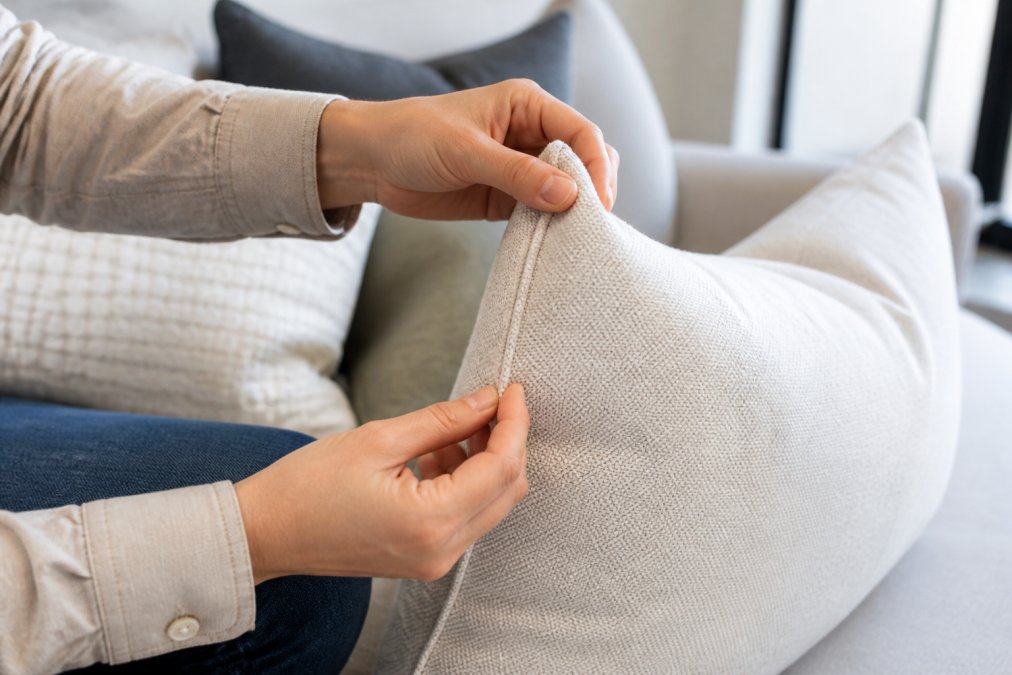
Construction Details That Signal Durability
Examine joints first. Quality uses mortise and tenon or dovetail joints; cheap uses pocket holes or staples. Joints should be rigid, not flexible.
Quality textiles have tight, even stitching with matching thread. TheJoyincolor's placemat sets use two-ply hemmed construction and high-quality stitching that prevent fraying and maintain structure through countless washings.

Quality hardware feels substantial and moves smoothly. Cheap hardware is thin, loose, and corrodes quickly.
Surface Finish and Wear Resistance
Quality finishes feel smooth and even with no thin spots. Multiple coats protect from moisture and UV damage.
Heavier fabrics resist pilling, tearing, and fading better. TheJoyincolor's accent pillows use 6.49-7.37 oz./yd.² fabric weight for superior durability.
Quality pieces choose finishes matched to intended use: matte hides dust but shows fingerprints; satin balances visibility and practicality; high-gloss requires constant maintenance.
The Financial Case for Investing in Quality Home Decor
The economics of quality are straightforward once you calculate total cost of ownership. Quality home decor lasts longer, which means lower replacement costs and higher satisfaction over time.
Lifecycle Cost Analysis: Why Higher Upfront Costs Pay Off
Lifecycle cost analysis (LCA) measures the true cost of ownership across the entire lifespan of a product. Most people compare only the purchase price, ignoring maintenance, replacement frequency, and disposal costs.
Consider a $17 machine-washable accent pillow versus a $10 alternative. The quality pillow maintains shape and color through 50+ washings. The cheap pillow flattens and fades after 15 washings. To maintain the same visual standard for 5 years, you'd need to replace the cheap pillow three times, spending $30 total, versus buying the quality pillow once.
Add in the hidden costs: time spent shopping for replacements, shipping costs, the frustration of receiving items that don't match your space, and the environmental impact of disposal. The quality choice wins decisively on every metric.
According to Mintel's 2026 US Shopping for the Home Consumer Report, consumers are actively rethinking the definition of value and seeking products that deliver long-lasting quality.
Resale Value and the Second-Hand Market
Quality decor appreciates in the resale market. Vintage and heirloom pieces command prices at estate sales and specialty retailers. A well-made wooden table from 30 years ago might sell for more than it originally cost. A cheap particleboard table from 5 years ago has no resale value.
Timeless Design vs Passing Trends: Building Permanence
Design trends change rapidly, but timeless design endures. Quality home decor lasts longer partly because it's designed for permanence rather than trend-chasing. This is where the psychological dimension matters.
Maintenance and Care for Long-Lasting Decor
Quality decor requires maintenance, but not excessive amounts. Proper care extends lifespan dramatically and actually deepens the beauty of natural materials.
Understanding Patina and Natural Aging
Patina is the visible evidence that a piece has been used and cared for. It's not damage, it's proof of material integrity. Understanding this mindset shift is crucial to appreciating why quality natural materials outlast synthetic alternatives.
Practical Care Routines by Material Type
Different materials require different maintenance approaches:
| Material Type | Primary Care | Frequency | Expected Result |
|---|---|---|---|
| Hardwood | Dust with soft cloth; polish quarterly | Monthly dusting, quarterly polish | Deepening color, visible grain |
| Ceramic/Stone | Gentle cleaning with appropriate cleaner | Weekly | Subtle patina, enhanced luster |
| Upholstery | Vacuum; spot-clean spills immediately | Weekly vacuuming, as-needed cleaning | Color retention, maintained shape |
| Metal Finishes | Dust regularly; avoid harsh cleaners | Weekly | Warm patina development |
| Textiles (washable) | Machine wash in cool water; air dry | Per use/instructions | Color and shape retention |
For theJoyincolor's machine-washable accent pillows, the care routine is straightforward: wash the case in cool water and air dry. The shape-retaining insert maintains form through countless cycles because of its quality construction. This simplicity is itself a mark of quality, pieces designed for real life, not museum display.
Sustainability and Reducing Waste Through Quality Choices
Choosing quality home decor is fundamentally a sustainability choice. Durability eliminates waste. According to SourceReady's 2026 US Home Décor Market Report, sustainability is a key driver for the $202-210 billion market, with consumer behavior shifting toward products that offer long-term utility and don't require frequent replacement.
Frequently Asked Questions
What materials make home decor last longer?
Natural materials like hardwoods, stone, ceramic, and high-quality metals age gracefully and develop character over time. Polyester textiles with proper weight (6.49-7.37 oz./yd.²) and machine-washable construction resist wear better than thin fabrics. Quality materials maintain structural integrity through repeated use, while inferior materials degrade quickly. The key is material density and craftsmanship, heavier fabrics, solid wood joinery, and finished metal surfaces all signal longevity. Quality decor pieces are built to last decades, not seasons.
How do you distinguish between high-quality and low-quality decor?
Examine construction details: look for reinforced seams, hidden zippers, and shape-retaining inserts in pillows; check wood for solid joinery rather than staples; test fabric weight and feel. High-quality pieces use premium materials sourced from established suppliers and feature consistent finishing. Read reviews specifically about durability, consumers rely on product reviews to assess long-term quality before purchasing. Low-quality decor shows thin materials, visible stitching flaws, and poor surface finishes. Price alone doesn't guarantee quality, but pieces under $20 rarely offer the craftsmanship needed for lasting appeal.
Why does fast furniture fail to stand the test of time?
Fast furniture prioritizes affordability and rapid production over durability. It uses thin materials, minimal joinery, and surface-level finishes designed to look good initially but deteriorate quickly. These pieces cannot withstand repeated use, and their dated designs become eyesores within months. Quality decor, by contrast, uses substantial materials, proper construction techniques, and timeless aesthetics. The difference is dramatic: a fast furniture piece might last 1-2 years, while quality home decor can remain functional and beautiful for 10-20+ years, making it genuinely cost-effective.
What's the long-term financial benefit of investing in quality home decor?
Quality decor saves money through lifecycle cost analysis: a $17 accent pillow with machine-washable construction and a shape-retaining insert lasts years with minimal replacement, while cheap alternatives require frequent repurchasing. Quality pieces retain resale value in the second-hand market, recovering 30-50% of original cost. They reduce waste and environmental impact by eliminating constant replacement cycles. Additionally, quality home decor enhances your living environment's aesthetic and psychological comfort, improving daily well-being, a benefit that extends beyond pure financial calculation.